
Why Is My Zillow Rent Estimate So Low?
You know the unit. You know what the last tenant paid, what the neighbor down the street is asking, what the place is worth. Then Zillow shows a rent estimate $300 under all of it and you're left wondering what it's seeing that you're not.
The answer is usually the opposite: it's missing what you can see. A Zillow rent estimate is one modeled number with no comps attached, and when it reads low it's almost always because the model is working from incomplete or mismatched data about your specific property.
Here are the reasons a single-property estimate skews low, how to tell which one is hitting you, and how a comp-based tool like RentEst lets you correct for each.
1. Zillow has the wrong square footage or bed/bath count
The model leans hard on the basic facts of the home. If the public record says 1,400 square feet and the place is actually 1,800, the estimate is pricing a smaller home than you own.
Tax records lag. Finished basements, additions, and conversions often never make it into the data Zillow pulls. The model can only price the home it thinks you have.
How to tell: open your property's page and check the beds, baths, and square footage Zillow lists. If any of it is wrong or low, that alone can explain the gap. RentEst lets you enter the real square footage as a property input and rerun the estimate against it.
2. The comps are stale
Rent estimates lag the market. If your area's rents climbed over the last six months, a model trained on older listings is still anchored to last season's lower numbers.
In a rising market, "stale" reads as "low." The estimate isn't wrong about the past — it's just late to the present. RentEst puts a last-seen date on every comparable, so you can see at a glance whether the set describes this market or the last one.
3. The comps are coming from a cheaper pocket
Two homes a mile apart can sit in very different rent tiers — different school zone, busier street, older building stock. If the model pulls comps from a lower-priced pocket nearby, your estimate gets dragged down with them.
You can't see which listings it used, so you can't catch this from the number alone. It just looks low for no reason. RentEst lists each comp's address and exact distance, which makes a comp set drawn from the wrong pocket obvious.
4. It can't see your upgrades
A renovated kitchen, in-unit laundry, new floors, a parking spot. These move real rent by hundreds of dollars, and a feature-based model that only knows beds and baths misses every one of them.
This is the most common reason a good unit reads low: the things that make it worth more are exactly the things the model can't see. No automated tool prices a renovation it doesn't know about, RentEst included — but when you can see the comps, you can adjust up from them deliberately instead of guessing at a black box.
The proof: give the model the right data and the number moves
The clearest way to see this is to feed in a property specific the model was missing. Enter the real square footage in RentEst, and the estimate moves to match the larger home.
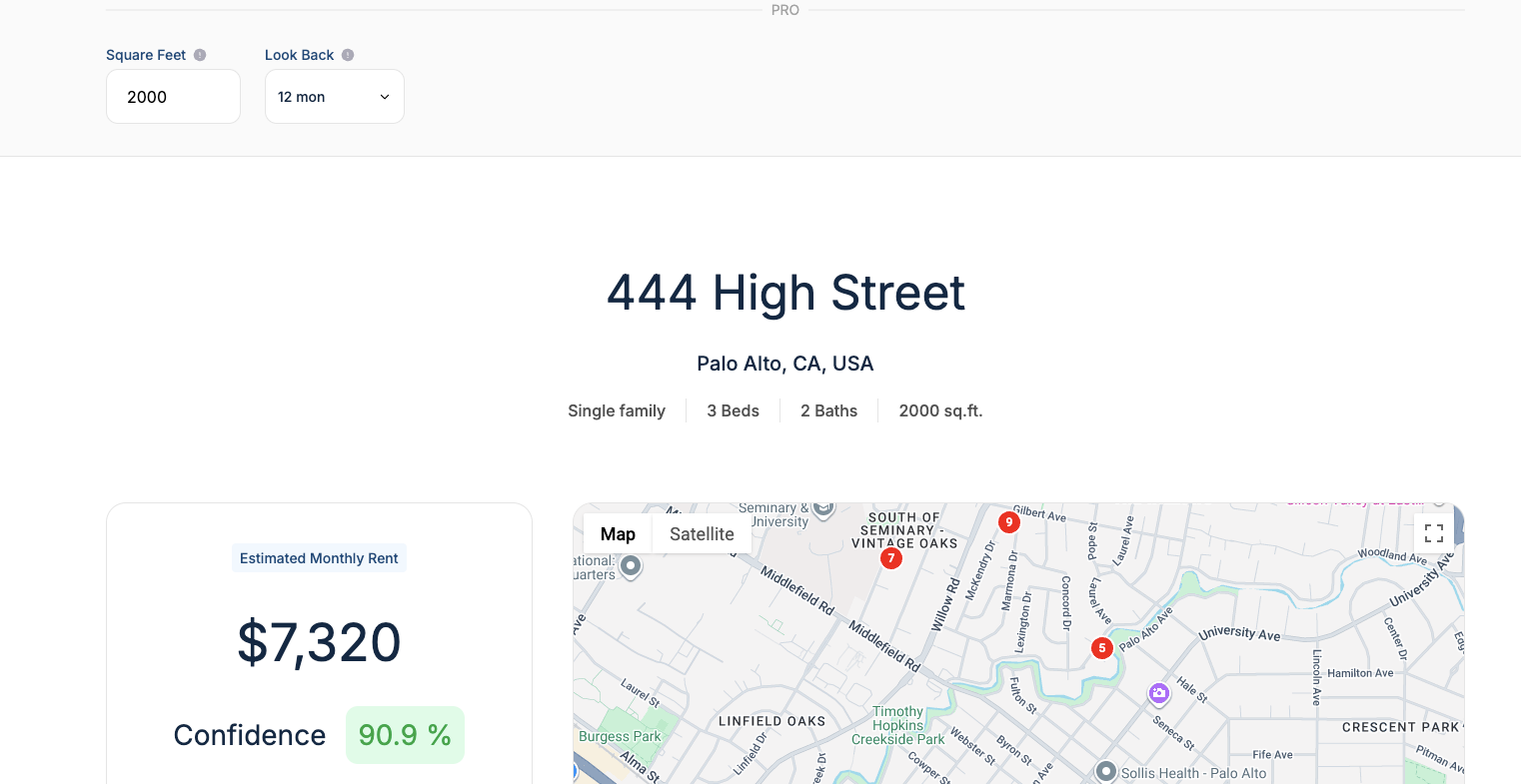
Set Square Feet to 2,000 as a property input and the RentEst estimate shifts up to $7,320. That jump isn't the tool being generous. It's the number correcting once it stops guessing at a fact you already knew. A low estimate is often just a confident guess built on a blank where your property's real details should be.
What to price on instead
Don't argue with the Zestimate — replace it with evidence.
- Pull the actual comps. Find 5–10 recently listed rentals that match your real beds, baths, and size within about a mile. The cluster they form is your range, not the single modeled number. RentEst assembles this set for any U.S. address for free.
- Filter for recency. Weight listings from the last 60–90 days so you're pricing today's market, not last year's.
- Match the pocket, not just the radius. Drop comps from a different school zone or a clearly different street tier, even if they're close.
- Adjust up for what you have. Add back for the renovation, the parking, the laundry — the specifics the model couldn't price.
When you can read the comps behind the number, a "low" estimate stops being a mystery. RentEst shows whether it's genuinely a soft market or just a model missing your square footage.
The takeaway
Why is your Zillow rent estimate so low? Almost always because it's missing something you already know — the right square footage, current comps, the right pocket, or the upgrades that make the unit worth more. It's not a verdict on your rent; it's a guess with gaps.
Fix the gaps by pricing on real, recent comps instead of one black-box number. Run the address through RentEst, correct the property details it got wrong, and read the comps behind the result — the low estimate usually explains itself.
See the comps behind your rent estimate with RentEst.ai
