
Why Do Rent Estimates Differ Between Sites?
Check the same address on three rent tools and you'll often get three different numbers — sometimes $300 apart. It's enough to make you wonder which one is broken. None of them is. They just made different choices about what data to use.
The gap isn't random. Each site builds its estimate from a different set of listings, selected a different way, weighted by different recency rules, and pulled from asking rents that may not match what tenants actually paid. Change those inputs and you change the number.
Here's what actually drives the spread between sites, and how to turn three conflicting estimates into one you can price on.
1. They're built on different data
No single source sees the whole rental market. Each site works from the slice it can reach.
- A brokerage-rooted tool leans on MLS data and is strongest on for-sale comps, thinner on rentals.
- A marketplace tool leans on its own listings inventory, which skews toward whatever advertises there — often big managed apartment complexes.
- A broad listings tool blends public records and a wide listing feed.
Different starting data, different answer. The address is the same; the evidence each model sees is not.
2. They select comps differently
Even from the same listings, two tools pick different comps. One uses a fixed radius around your address. Another uses a feature-based model that weighs beds, baths, and square footage. A circle and a model will grab different sets of nearby rentals, and the set drives the number.
A radius that's too wide pulls in a different price tier across a highway. A model with thin local data leans on broader averages. Same property, different comps, different estimate.
3. They weight recency differently
Rent moves fast, so when a comp was listed matters as much as where. One tool may weight the last 90 days heavily; another may reach back a year to find enough comps.
In a market that just turned, that timing difference alone can move an estimate. The site reaching back further is describing an older market.
4. They mix asking and leased rent
Most public rent data is asking rent — what landlords posted, not what tenants signed. Sites handle the gap differently. Concessions like "two months free" and overpriced units that sat for weeks pull asking-based estimates above true market. A tool that corrects for that lands lower than one that doesn't.
This is the single biggest source of disagreement, and it's why two honest tools can both be "right" while differing by a few hundred dollars.
5. They see different property features
A renovation, parking, in-unit laundry, a finished basement. Some models can factor in property-specific inputs; others only know beds and baths from public records. The more a model can see, the further its number moves from the generic average — and from the tools that can't see it.
How to reconcile the spread
Three different numbers aren't a problem if you can see what's behind each one. The move isn't to average them — it's to look at the comps and decide which ones actually fit your property.
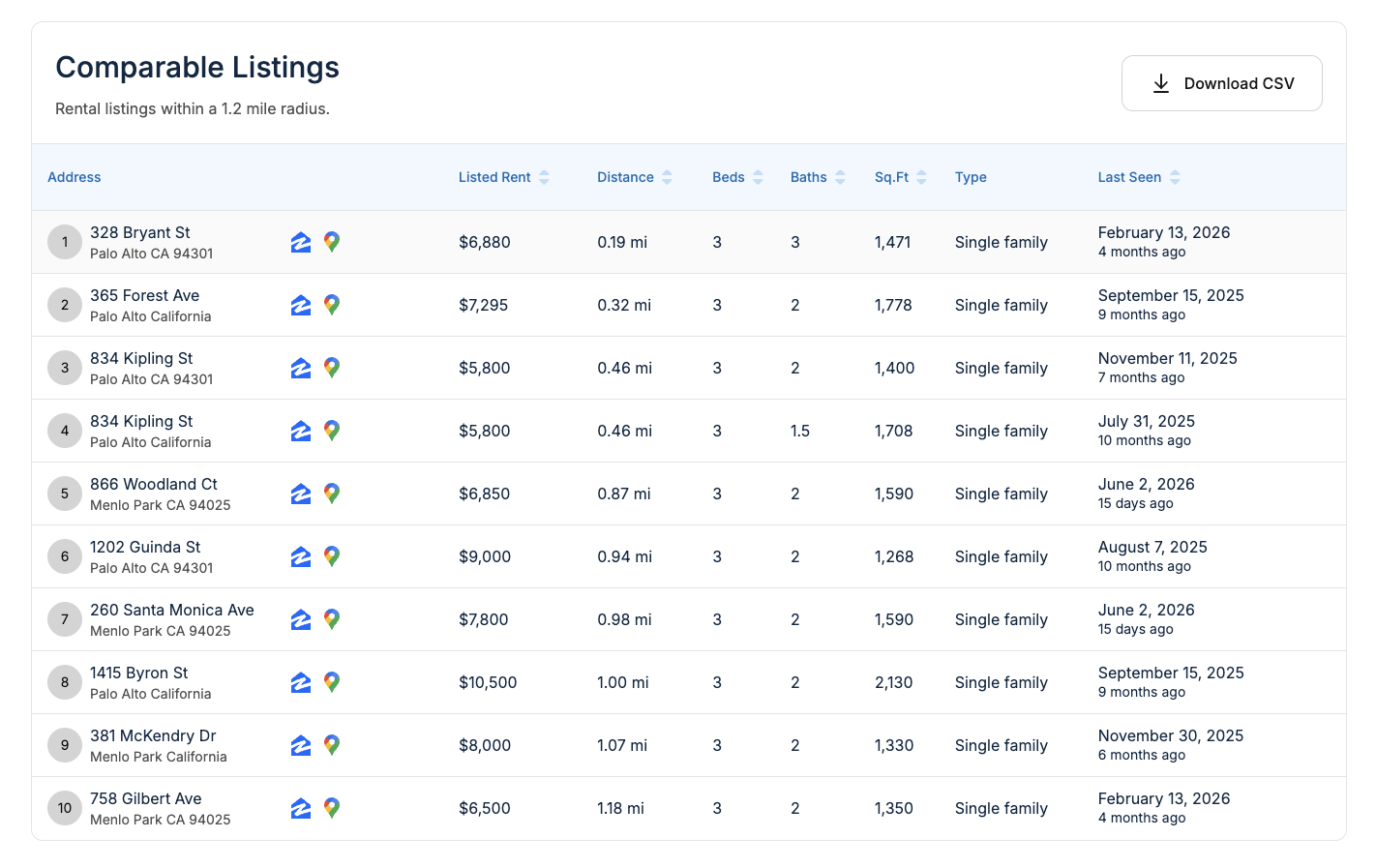
When you can see the listings — their distance, size, type, and how recently they were seen — the disagreement explains itself. The site that came in high pulled older or amenity-loaded comps; the one that came in low matched fresher, closer listings. You stop guessing which number to trust and start building your own from the comps that belong.
- Read the comps, not the conclusions. Keep listings that match your real beds, baths, and size within about a mile.
- Drop the stale ones. Weight the last 60–90 days.
- Separate asking from leased. Adjust advertised rents down for concessions and price cuts.
- Adjust for your property. Move up or down for condition, parking, and layout the models can't see.
The takeaway
Why do rent estimates differ between sites? Because each one chooses different data, different comps, different recency, and a different way of handling asking-versus-market rent. The spread is the natural result of those choices, not a sign any tool is broken.
The reconciler isn't a fourth number — it's the comps underneath. See the listings each estimate is built on and you can settle the disagreement yourself, with a number you can defend.
Reconcile the estimates with the comps behind them on RentEst.ai