
Why Asking Rent Isn’t Market Rent (And How to Tell the Difference)
One of the most expensive pricing mistakes is assuming asking rent equals market rent. It doesn't. Price on the asking number and you get longer vacancies, or false confidence in a deal that doesn't actually pencil.
Asking rent is what a landlord wants. Market rent is what tenants pay. Here's how to tell the difference.
What each one actually is
Asking rent is the price listed publicly on Zillow, Apartments.com, or Craigslist. It reflects intent — owner expectations, optimism, stale assumptions, "my neighbor got this much." It says nothing about whether the unit leased, or at what price.
Market rent is what tenants are actually paying for comparable units right now. It comes from recently leased units and verified comps, and it reflects real demand and competition.
See it in the comps
A good comp set shows you both signals at once — the listed rent and how recently each unit was seen:
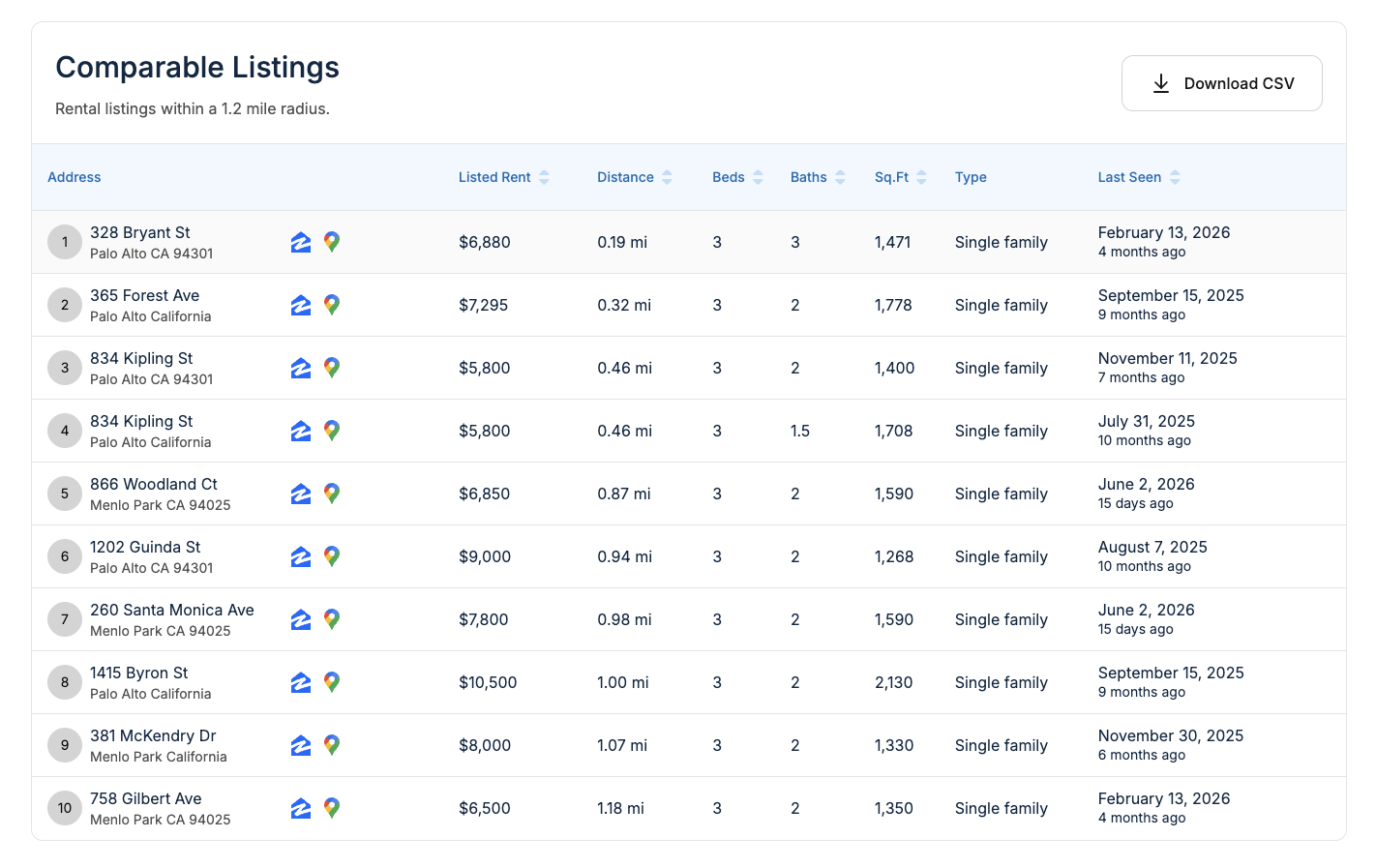
A unit listed at the top of the range that's been sitting for months tells a different story than one that leased last week. The "Last Seen" date is how you separate ambition from reality.
Why asking rent usually runs high
In most markets, asking rents skew above market rent:
- Stale listings. Overpriced units stay online longer, inflating the visible average.
- Survivorship bias. You only see what hasn't rented yet — the cheap units already leased and disappeared.
- Negotiation gap. Final leases often close 3–10% below ask.
- Outliers. Renovated and luxury units distort the listings you see.
Anchor on asking rent and you'll overestimate achievable income — especially in an underwriting model.
Asking vs. market, side by side
| Factor | Asking rent | Market rent |
|---|---|---|
| Source | Public listings | Closed leases |
| Reflects demand? | Indirectly | Yes |
| Includes negotiation | No | Yes |
| Good for pricing? | No | Yes |
How to spot an over-market asking price
- Listed 30+ days with no price change
- Repeated price reductions
- Big spreads between similar nearby units
- Low inquiry or showing volume
A comp-backed estimate is the fastest way to confirm whether an asking price is realistic.
How to find true market rent
- Start from recent leases, not active listings
- Anchor on the median, not the average
- Limit comps by distance, unit type, and size
- Check how fast similar units leased
- Adjust for condition and amenities
The takeaway
Base decisions on asking rent and you're pricing on hope. Base them on market rent and you're pricing on reality — fewer vacancies, defensible numbers, and underwriting you can trust.
Run a market-backed rent estimate on RentEst.ai →
Frequently asked questions
Is asking rent ever equal to market rent? Sometimes — when demand is strong and units lease fast with little negotiation.
Why do free estimate sites rely on asking rent? It's easy to scrape at scale. Lease data is harder to collect and normalize.
Should landlords ignore asking rent entirely? No — it's useful for reading competition, just not for setting the final price.
How often should I recheck market rent? Every 60–90 days in active markets; more often during seasonal shifts.