
What Makes a Good Rent Comparable? Distance, Age, and Unit Type Explained
Not all rent comparables are equal. Lean on weak comps and you overprice into a long vacancy, or underprice and leave money on the table. The estimate is only ever as good as the comps behind it.
Three things decide whether a comp is worth trusting: distance, property age, and unit type. Here's how to judge each — and what a good comp set actually looks like.
Start by looking at the comps, not just the number
A trustworthy tool shows you the comparables it used, with the details that matter:
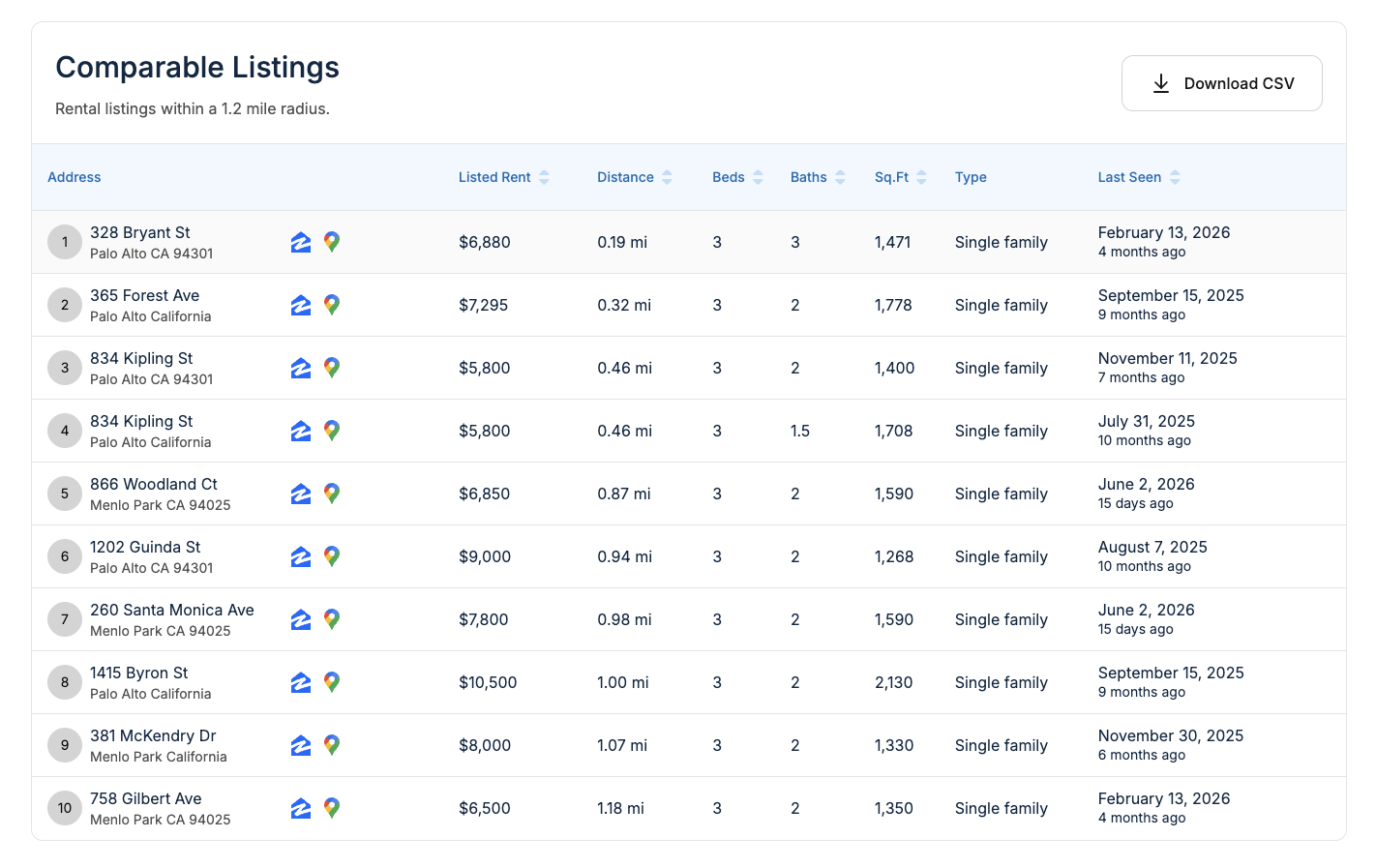
Every row here carries the three factors below — distance, type, and recency — so you can throw out the comps that don't fit instead of trusting a black-box average.
Distance: how close is close enough?
Location is the single biggest driver of rent. A few blocks can mean a different school zone, different demand, different price.
- Urban: comps within 0.25–0.5 miles
- Suburban: 0.5–1 mile is usually fine
- Rural: 1–5 miles may be unavoidable when data is thin
If you have to widen the radius, favor comps in the same neighborhood or ZIP. When comps are clustered far from the subject, that's a signal the number is shaky — not gospel.
Property age: why year built matters
Two identical layouts can rent for very different amounts depending on era — insulation, floor plans, wiring, and tenant expectations all shift with age.
- Match within roughly ±10–15 years
- Treat pre-1980, 1980–2000, and post-2000 as separate groups
- A major renovation can offset age — but adjust for it deliberately, don't ignore it
Unit type: keep it apples-to-apples
Unit-type mismatches are the most common comp mistake. Apartments, condos, townhomes, and single-family homes are different rental markets even on the same street.
- Single-family vs. multifamily
- Apartment vs. condo
- Detached vs. attached
- Accessory dwelling units (ADUs)
A 3-bed single-family home should never be priced off apartment comps unless there's truly nothing else. Filter by building type first.
The quick framework
| Factor | Ideal match | Acceptable | Risk if ignored |
|---|---|---|---|
| Distance | Same neighborhood | Up to 1 mile | Mispriced rent |
| Age | ±10 years | ±20 years | Over/under valuation |
| Unit type | Exact match | Rarely flexible | Invalid comp set |
How to build a strong comp set
- Start broad with an address-based estimate
- Filter to the matching unit type
- Narrow the radius to the smallest workable distance
- Adjust for age and renovation status
- Confirm you still have 5–15 solid comps
Fewer high-quality comps beat a big pile of weak ones every time.
The takeaway
Your estimate is only as reliable as your comps. Prioritize distance, age, and unit type, look at the actual comparables, and your price reflects real demand instead of a misleading average.
See the comps behind your estimate on RentEst.ai →
Frequently asked questions
How many comps do I need? Aim for 5–15 strong ones. Fewer can work in low-density areas.
How recent should comps be? Within the last 6–12 months. In volatile markets, weight the freshest data.
Can I use listing prices instead of leased rents? They're directional but less reliable than closed leases — use with caution.
Do renovations change comp eligibility? Yes. A renovated older unit may compete with newer builds, but still adjust for it.