
How Professional Investors Sanity-Check Rent Before Making an Offer
Before a professional investor submits an offer, they almost never trust a single rent estimate. They run a quick, disciplined sanity-check first — because rent drives everything downstream, and a small error compounds.
A $150/month miss on rent can flip a "great deal" into negative cash flow once financing, maintenance, and vacancy hit. So pros assume the estimate could be wrong and actively try to disprove it. Here's how.
1. Start with a baseline — but don't trust it yet
Get a fast estimate to set the pricing band. This is just the starting point, not the answer.
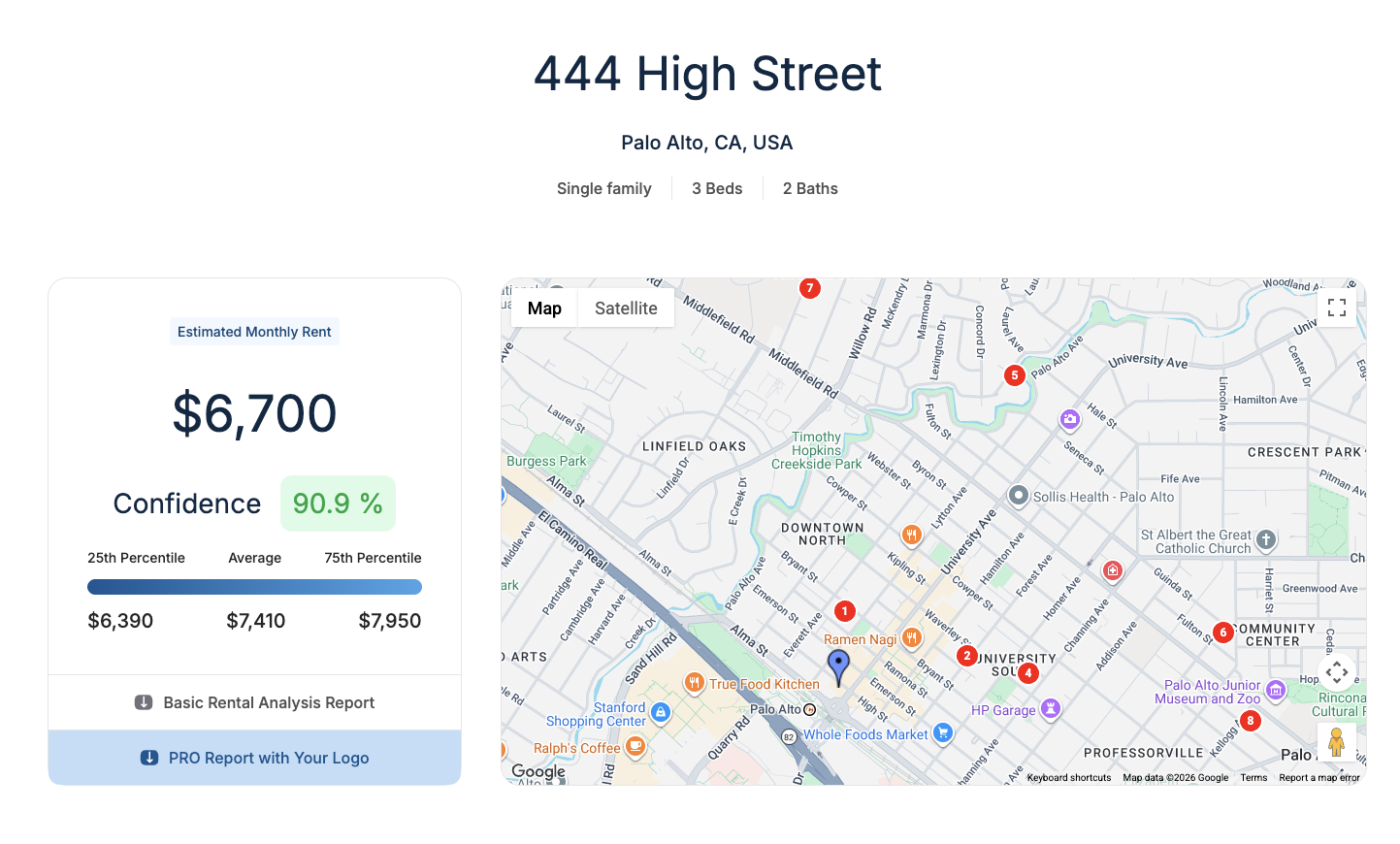
Note the confidence score right next to the number. A high score (here, 90.9%) means there were enough close, recent comps to trust the band. A low one means dig deeper before you believe it.
2. Anchor on the median, not the average
Pros watch both but lean on the median. Average rent gets dragged up by luxury units and anomalies; the median reflects what most tenants actually pay. If the asking rent sits well above the median, the immediate question is: what makes this property different?
3. Inspect the comps themselves
This is the real work — less about the final number, more about which properties built it:
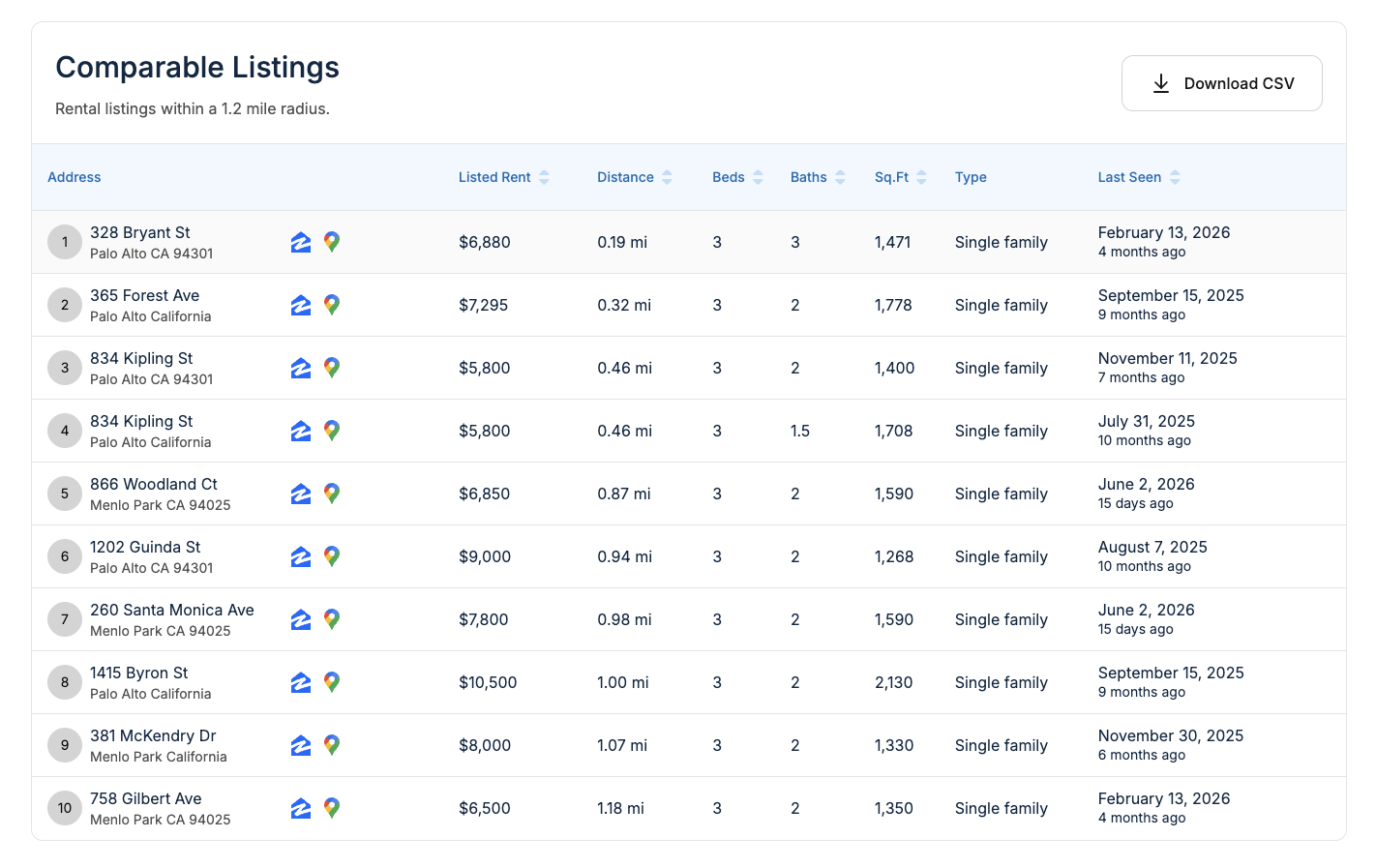
Check distance (0.5–1 mile for single-family), unit type (house vs. apartment), bed/bath count, and recency. If the set is mostly apartments or mostly stale, the number is suspect no matter how clean it looks.
4. Read the confidence — and be skeptical when it's low
A low confidence score usually has a visible cause. Here, the comps are sparse and clustered miles away in a rural market:
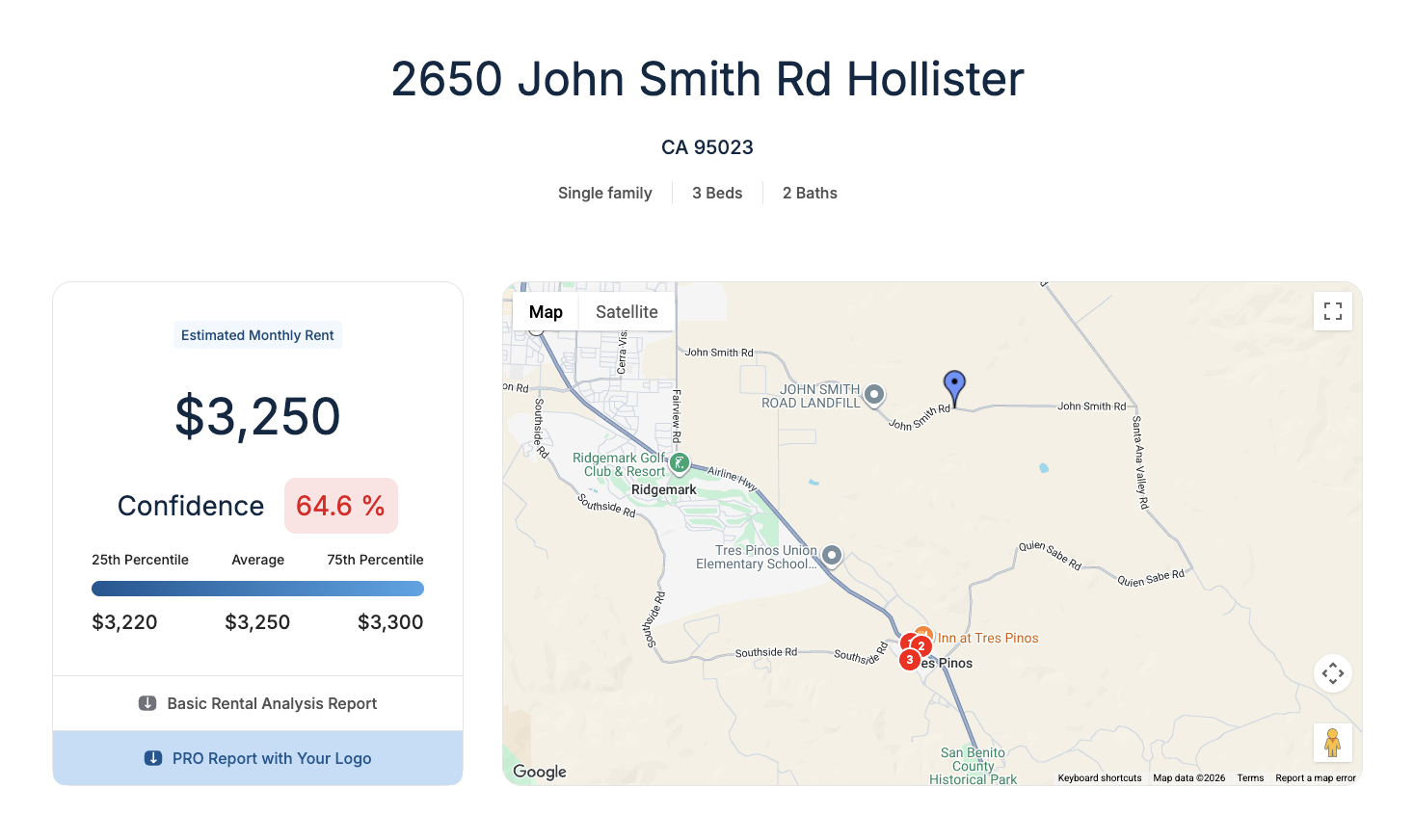
When you see this, don't underwrite to the estimate. Widen your own research or pass.
5. Stress-test the downside
Pros don't underwrite to the top of the range. They run the deal at:
- the 25th-percentile rent, or
- median minus 5–10%
If it still works under conservative rent, it passes. If it only works at the high end, it gets repriced or rejected.
6. Cross-check rent against price
As a final gut-check, compare monthly rent to purchase price, and to what nearby comparable properties sold for. If rent looks high relative to price — or out of line with the neighborhood — that's a flag the estimate may be optimistic.
Red flags pros watch for
| Red flag | Why it matters |
|---|---|
| Comps are mostly apartments | Apartment rents don't map to single-family homes |
| Very small comp set | Low sample size = high estimation error |
| Rents far above the median | Luxury bias or overfitting |
| Stale comps | Markets shift; old data misleads |
| Low confidence score | Thin or far-flung comps — don't trust the number |
The takeaway
The difference between amateurs and pros isn't complexity — it's a consistent check: baseline, anchor on median, inspect the comps, read the confidence, stress-test the downside, cross-check against price. It takes minutes and saves thousands.
Sanity-check rent with real comps on RentEst.ai →
Frequently asked questions
How accurate are online rent estimates? Useful for direction, not for decisions on their own. Accuracy depends on comp quality, sample size, and the confidence score.
Should I trust the highest estimate? No. Assume achievable rent is closer to the median unless the property has clear advantages.
How many comps are enough? Generally 8–15 quality comps give a reasonable confidence band.
Is the check different for apartments? Yes. Apartments behave like commodities; single-family homes need tighter comparability.