
Rent Pricing for First-Time Landlords: How Much Should You Charge?
The first number you pick as a landlord sets the tone for the whole year. Price 8% high and the unit sits empty for a month while you wait for a tenant who never shows at that rent. Price low and you lock in under-market income for a full lease term. Neither mistake announces itself until it's already costing you.
The good news: setting rent isn't guesswork once you know the order of operations. You don't decide what to charge — the market does, and your job is to read it. New landlords get into trouble by starting from the wrong place: their mortgage, a hopeful number, or the one loud listing down the street.
Here's the step-by-step that lands a number you can actually rent.
1. Start from comps, not your costs
Your mortgage, taxes, and insurance decide whether the deal works. They do not decide the rent. A tenant pays what comparable units rent for, not what you need to cover your payment.
Add up your costs to check if the property cash-flows. But set the rent from the market, which doesn't know or care what you paid.
2. Pull recent listings that match your unit
Find rentals near you that are genuinely comparable: same bedroom and bathroom count, similar square footage, within about a mile. The closer the match, the better the signal.
Two filters matter most for a first-timer:
- Recency. Use listings from the last 60–90 days. Rent moves, and a comp from last year describes a market that's gone.
- Similarity. A 3-bed doesn't price off 2-beds, and a house doesn't price off an apartment complex. Match like to like.
3. Anchor to a comp-based estimate
Instead of eyeballing a dozen listings, start from a rent estimate that's built from the comps and shows them to you. It gives you a range, a confidence read, and the listings behind the number in one view.
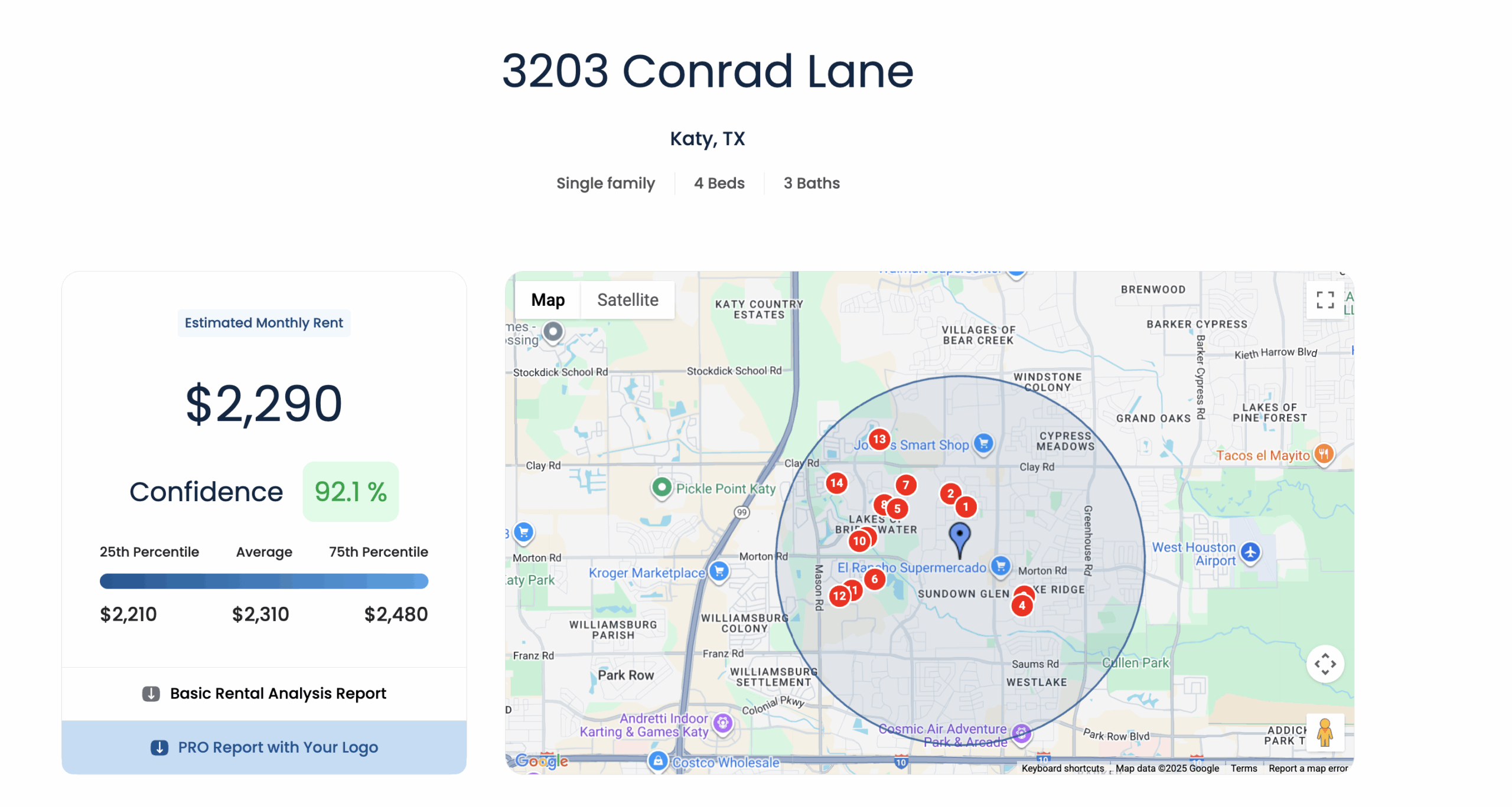
That's the anchor: a number ($2,290 here), a confidence score (92.1%), and the comps on the map that justify it. A high-confidence estimate means the market is clear and you can price tight. A lower one means the comps are thin, so lean conservative. Either way you're starting from evidence, not a hunch.
4. Adjust for your property's specifics
The estimate prices the typical unit like yours. Now move up or down for what makes yours different.
- Add for a renovation, in-unit laundry, parking, a great layout, or outdoor space.
- Subtract for dated finishes, no parking, a bad floor plan, or a busy street.
Keep the adjustments honest and modest. A new kitchen is worth something; it isn't worth $400 over the top comp.
5. Don't anchor to the one loud listing
Every market has a unit asking far above the rest. First-time landlords fixate on it because it's the number they want. But asking rent isn't leased rent — that listing may sit for weeks before it cuts.
Price to where comparable units actually rented, not to the most optimistic sign on the block.
6. Pick your number based on your priority
Inside the comp range, where you land depends on what you want more.
- Lease fast? Price at or just below the middle of the range. You'll draw more applicants and cut vacancy.
- Maximize rent? Price near the top, and accept it may take longer to fill. Just remember the math: one empty month is about 8% of the year's rent, so a small premium has to hold for a long time to pay for a single vacant month.
7. Sanity-check that it will actually rent
A price only works if tenants can pay it. As a rough screen, rent around or below 30% of a typical local household's income tends to lease; far above that thins your applicant pool. If your number clears the comps but not affordability, the comps will win.
The takeaway
How much rent should you charge? Start from recent, matching comps — not your costs — anchor to a comp-based estimate with a visible range and confidence, adjust honestly for your unit, and pick a number in the range that fits your goal. Then check it actually rents.
Do that and your first number won't be a guess you regret a month into a vacancy. It'll be a defensible read of the market, which is the whole job.
Get a comp-backed rent estimate for your property with RentEst.ai