
How Vacancy Risk Should Influence Your Rent Price
Price a unit 8% above the market and it can sit empty for a month. That empty month is revenue you never recover, and it often costs more than the higher rent ever earns back. Setting rent isn't about the highest number you can advertise. It's about the most money you actually collect over a year.
This post breaks down how vacancy risk should shape your rent price, how to put real numbers on it, and how to price for effective income instead of optimism.
What vacancy risk means for pricing
Vacancy risk is the chance your unit sits empty, and for how long. Every vacant day is lost rent that can't be made up later in the year.
Even strong markets have vacancy. The question is never whether a unit will turn over, but how long it stays empty, and whether your asking rent is making that gap longer than it needs to be.
Why a vacant month costs more than a lower rent
Landlords fixate on monthly rent and forget that annual income is what pays the bills. One extra vacant month can wipe out a full year of the premium you were chasing.
| Strategy | Monthly rent | Vacancy | Annual rent collected |
|---|---|---|---|
| Higher rent, longer vacancy | $2,000 | 1 month empty | $22,000 |
| Lower rent, fast lease-up | $1,900 | 0 weeks empty | $22,800 |
The lower rent earns $800 more over the year. The $100/month premium never had a chance to make up for the four weeks of zero income. That's the whole tradeoff in one table.
Market conditions change the math
Vacancy sensitivity isn't fixed. It moves with the market:
- Tight markets. A small rent bump barely affects lease-up speed. You can push.
- Balanced markets. Pricing at the median usually minimizes downtime.
- Soft markets. Even modest overpricing can stretch days on market sharply.
Know where your market sits before you reach for the top of the range.
Price in ranges, not a single number
There's no one "correct" rent. There's a range, and each point on it carries a different vacancy risk. A rent estimate by address shows that range directly.
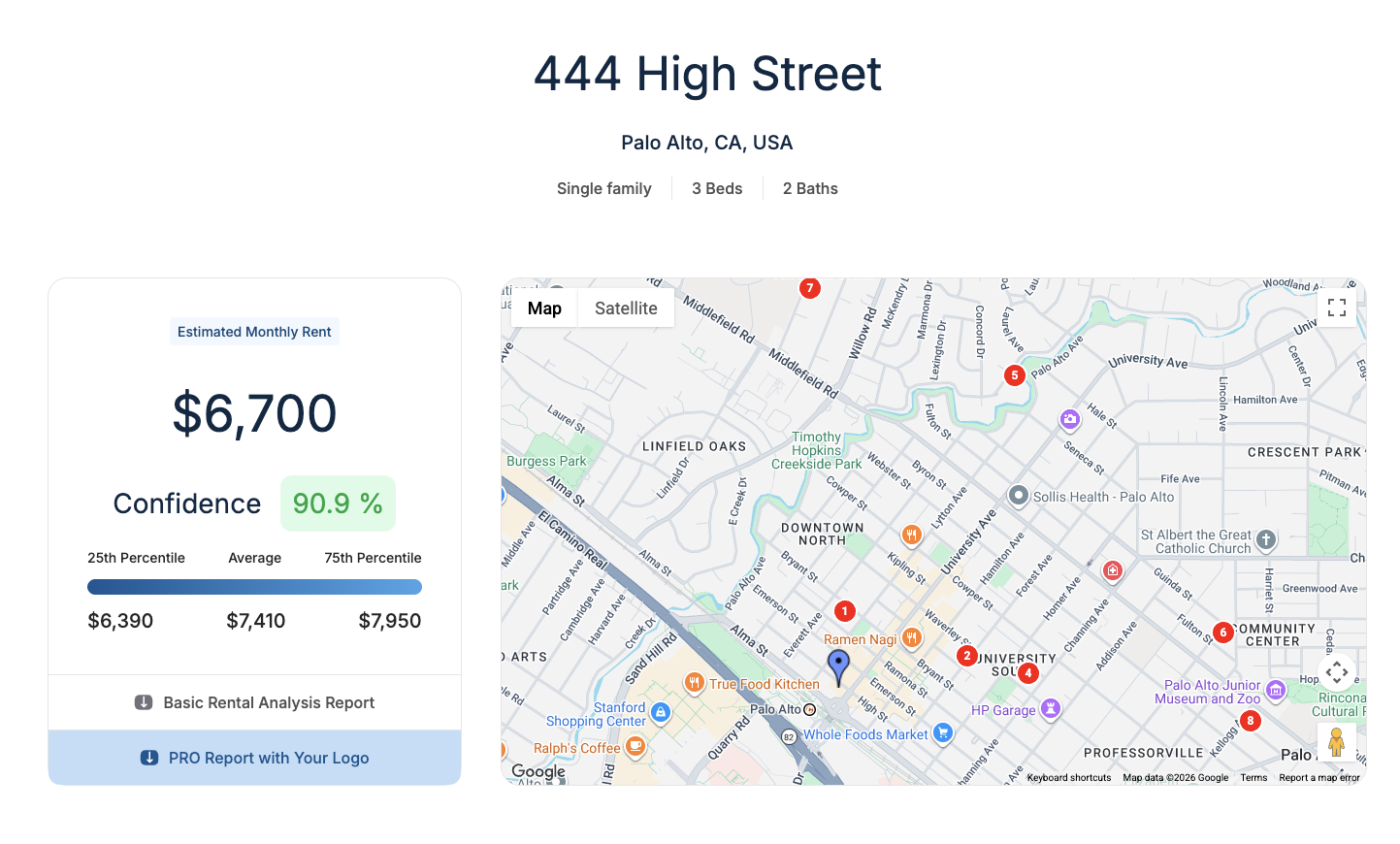
Read the range like this:
- 25th percentile. Fastest lease-up, lowest vacancy risk.
- Median. Balanced price and demand.
- 75th percentile. Highest upside, highest chance of sitting empty.
Where you price inside that band is a deliberate risk decision, not a guess.
A simple vacancy-adjusted framework
- Pull local comps with a rent estimate by zip code or by address.
- Find the median and upper-quartile rents from the range.
- Estimate expected vacancy at each price point.
- Compute annual rent collected, not monthly rent.
- Price where annual income peaks, not where the advertised number is highest.
When higher vacancy risk is worth it
Sometimes reaching for the top of the range makes sense:
- Luxury or highly differentiated units with a thin but real buyer pool
- Seasonal or short-term strategies where the model expects gaps
- Markets with strong inbound migration absorbing supply quickly
Even then, anchor the vacancy assumption to real data, not hope.
Monitor and adjust after listing
Vacancy risk isn't a one-time calculation. Watch the signals while the unit is live:
- Days on market versus similar listings
- Inquiry volume in the first week
- Nearby asking rents that move after you list
If activity is slow, cutting rent early usually saves more than holding out for weeks. With API access you can wire these checks into an automated pricing workflow and reprice before the empty days pile up.
The takeaway
The goal of pricing isn't the highest asking rent. It's the most income after vacancy. In most markets, a slightly lower rent that leases fast beats a premium price that sits. Put the annual numbers side by side, ground them in real comps, and price for what you'll actually collect.
See the full rent range and the comps behind it with a rent estimate by address.
Frequently asked questions
Is lowering rent always better than risking vacancy? No. The goal is maximum annual income, not minimum rent. In tight markets a higher rent may still lease quickly.
How much vacancy should I assume? Many landlords use 5–8% annually, but it varies widely by market and property type.
Does vacancy risk differ between apartments and single-family homes? Yes. Apartments often lease faster due to denser demand, while single-family homes can sit longer between tenants.
How often should I reevaluate pricing? At listing, after 7–10 days of low activity, and whenever market conditions shift.
Can rent comps predict vacancy risk? Indirectly. A wide gap between asking rents and leased rents often signals higher vacancy risk.
