
Pricing Rent on a Property You Just Bought: The First-90-Days Playbook
You closed. Now the rent number you underwrote on a spreadsheet has to survive contact with the real market. The first 90 days of ownership are when you find out whether the deal you bought is the deal you have — and the rent is the variable that decides it.
Two traps wait here. The first is trusting the seller's pro forma, which was a sales document, not a market read. The second is doing nothing — letting an inherited below-market lease ride for a year because re-pricing feels like work. Both leave money on the table from day one.
Here's the playbook for setting rent on a property you just bought, in order.
1. Re-underwrite the rent from scratch
The pro forma rent in the offering memo was built to make the deal look good. Maybe it's right; maybe it's the top of a stale range. Either way, it's the seller's number, and you no longer have any reason to use it.
Start over. The rent you underwrite now, as the owner, is the one your cash flow actually runs on. Treat the purchase price as sunk and price the unit to what it rents for today.
2. Set today's market number from recent comps
Pull comps that match the unit and, critically, that are recent. A property that traded may have sat on stale assumptions for months; the market has moved since the broker's numbers were set.
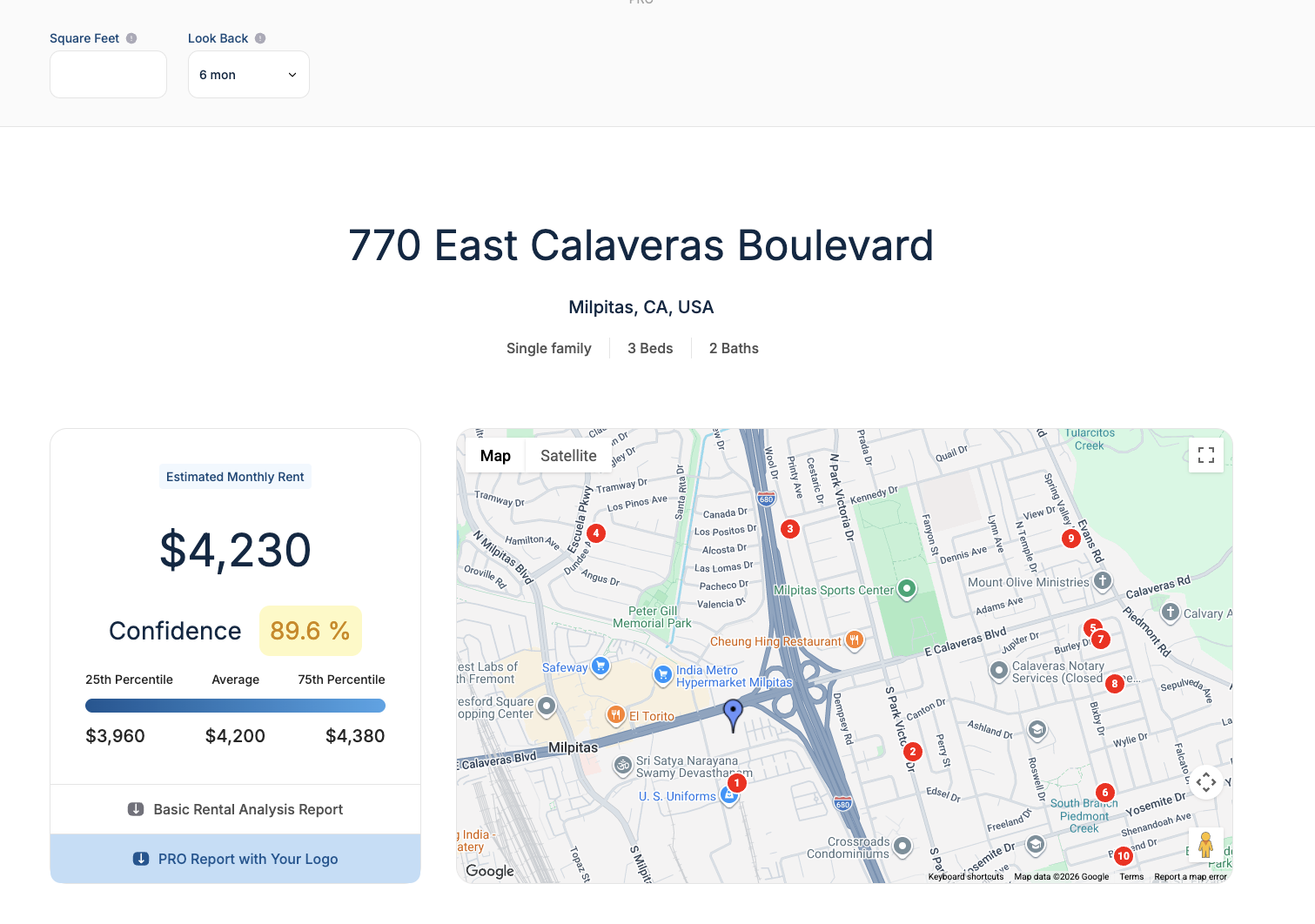
Narrowing the look-back window to recent listings is exactly the move on a fresh purchase. A 12-month comp set drags in last year's market; a 6-month window shows you what units like yours are leasing for now. That recent number is your real baseline — not the pro forma, not last year's rent roll.
3. Read the in-place tenant and lease
If you inherited a tenant, three facts drive your next move:
- Where the current rent sits versus the market number you just built. Below, at, or above.
- The lease term — how long until it converts to month-to-month or comes up for renewal. You generally can't raise mid-lease.
- The legal limits — your state or city's rent-increase cap and notice period, which set how fast and how much you can move a sitting tenant.
A unit $300 under market with eight months left on the lease is a different decision than the same gap on a month-to-month tenant.
4. Decide: keep, raise, or turn
With the market number and the lease facts in hand, pick a path.
- Keep a good tenant near market. A reliable payer at a small discount often beats turnover cost and vacancy.
- Raise at renewal when the gap is real and the tenant is worth keeping. Move toward market within the legal cap and notice rules, not all at once if that risks losing them.
- Turn the unit when the gap is large and the cap won't let you close it on a sitting tenant. A vacancy is your clean reset to market — sometimes the gap justifies it, sometimes the turnover cost doesn't. Run the math.
5. Time the reset and document it
If you're turning or renewing, plan the calendar. Count backward from your target date through the required notice period, and avoid re-leasing into a slow season if you can stagger it. Then write down the plan: current rent, market number, the gap, your move, and the date. The first 90 days set the trajectory for the whole hold.
The takeaway
What rent should you charge on a property you just bought? Not the seller's pro forma. Re-underwrite from recent comps to get today's real number, read the in-place lease and the legal limits, then decide deliberately whether to keep, raise, or turn.
The deal you closed becomes the deal you keep based on what you do in the first 90 days. Price to the current market, and the property starts earning what you bought it to earn.
Set your new property's rent from recent comps with RentEst.ai
