
How Often Should Landlords Reprice Rent? A Market-Based Framework
Set rent once a year and hope it stays competitive, and you will lose money or lose tenants. Rental markets move continuously, even when your leases do not. New comps enter the market daily and listings update in real time.
The question is not whether to revisit pricing. It is how often to reprice without creating needless vacancy or friction with good tenants.
This post lays out a market-based framework: when to monitor, when to actually change the price, and which signals matter more than the calendar.
Why rent pricing is a moving target
Rent responds to supply, demand, seasonality, interest rates, and local job growth. Online listings update daily and fresh comps appear constantly.
Landlords who do not track these shifts risk:
- Leaving rent below market for months or years.
- Overpricing and dragging out vacancy at turnover.
- Large, sudden increases that blindside tenants.
The goal is not constant rent changes. It is continuous pricing awareness with disciplined, occasional changes.
A practical repricing framework
Separate market monitoring from actual price changes. You should watch the market far more often than you move the price.
1. Monitor market rents monthly
Review market rents at least once a month, even when no change is planned. This keeps decisions grounded in current conditions, not last year's assumptions. Monthly checks surface:
- Gradual rent appreciation in your neighborhood.
- Sudden demand drops or new supply.
- Seasonal patterns that affect leasing speed.
A rent estimate by address makes it fast to compare your unit against nearby listings and recent leases.
A key control here is the recency window. Stale comps and fresh comps tell different stories, so the look-back period you use changes the number you get.
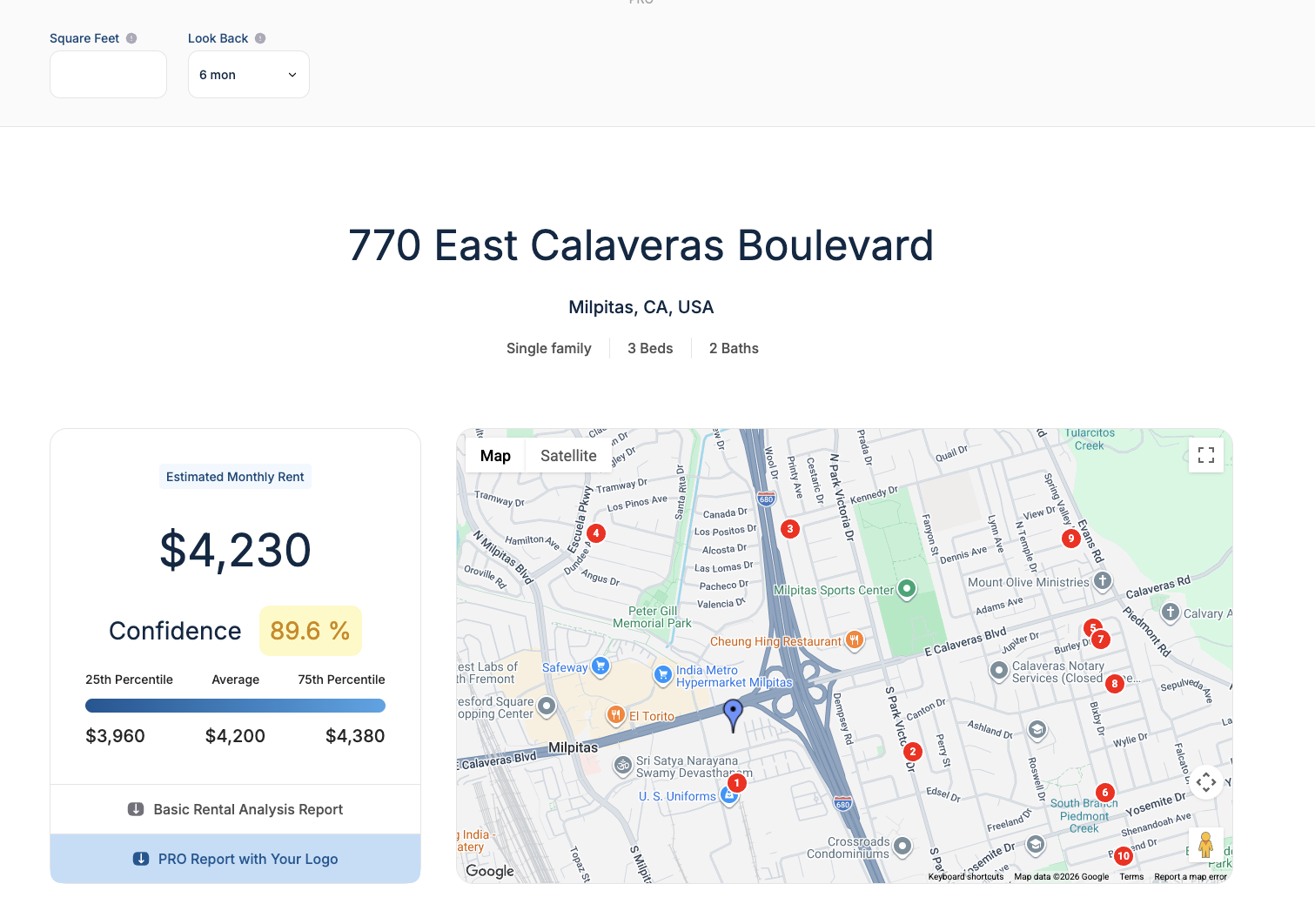
Tightening the look-back to 6 months drops older leases and shows you what the market is actually paying right now — which is exactly what you want when deciding whether to reprice.
2. Reprice actively during vacancy
Vacancy is when pricing flexibility matters most. While a unit is listed, reassess rent every 7–14 days.
Low showings or stalled applications are the market giving you feedback. A small move — even 2–3% — can sharply change response rates. Checking neighborhood-level data by ZIP code helps tell whether the problem is your unit or the whole market.
3. Adjust annually for existing tenants
For occupied units, most landlords change rent once a year at renewal. But the amount should reflect the market movement you watched all year, not a flat percentage. Market-based annual adjustments:
- Feel defensible to tenants.
- Reduce turnover risk.
- Keep rent from drifting far below market.
Recommended repricing cadence
| Situation | Market review | Price change |
|---|---|---|
| Occupied unit | Monthly | Annually, at renewal |
| Vacant unit | Weekly | Every 7–14 days if needed |
| Rapidly changing market | Bi-weekly | Case-by-case |
| Long-term hold | Monthly | Annually or semi-annually |
Signals that it's time to reprice
Watch market signals, not just dates on the calendar:
- Your rent is below the 25th percentile of comparable listings.
- Similar units lease faster at higher prices.
- Days on market exceed the neighborhood norm.
- Multiple price cuts appear nearby.
Pulling fresh comps and exporting them to CSV helps validate the call, especially across a portfolio.
A simple step-by-step process
- Run a fresh estimate on the property.
- Review comparable listings and recent leases.
- Check your position — 25th, median, or 75th percentile.
- Weigh vacancy risk against upside.
- Make small, data-backed adjustments.
For teams managing many units, the RentEst API supports automated rent monitoring across a portfolio.
Common mistakes to avoid
- Waiting a full year without checking market rents.
- Making large "catch-up" increases that shock tenants.
- Ignoring seasonality and local supply shifts.
- Using stale comps from previous lease cycles.
The takeaway
Monitor monthly, reprice actively during vacancy, and adjust annually for occupied units. Awareness — not constant change — is what keeps income optimized without driving turnover.
Run a fresh estimate and set your look-back window at rentest.ai/rent-estimate-by-address.
How often should landlords check market rent? At least monthly, even with no change planned.
Is it bad to change rent too often? Frequent changes during vacancy are normal. For occupied units, change typically happens only at renewal.
How much should rent increase each year? There is no universal percentage — it should track actual market movement and local conditions.
What if my rent is already above market? If vacancy persists, a modest reduction often beats waiting at a higher price.