
How to Underwrite Rent on a BRRRR Deal
The whole BRRRR strategy balances on one number you have to guess before you own the property: the post-rehab rent. It drives the cash flow, it anchors the appraisal at refinance, and it decides whether you pull your capital back out or leave it trapped in the deal. Miss it by 8% and a "BRRRR" quietly becomes a regular rental you overpaid for.
The hard part is that you're pricing a property that doesn't exist yet. The unit you're buying is tired, maybe vacant, maybe gutted. You're not underwriting the rent on that property — you're underwriting the rent on the renovated one you're about to create. Get that distinction right and the rest of the math has something solid to stand on.
Here's how to estimate post-rehab rent before you buy, without fooling yourself.
Price the property you'll create, not the one you're buying
The current condition is a distraction. A distressed duplex rents for less than the renovated duplex it'll become, and underwriting off today's state lowballs your number. Underwriting off the seller's optimistic pro forma overshoots it.
Define the finished spec first: the bed and bath count after rehab, the square footage if you're adding space, and the condition tier you'll deliver (cosmetic refresh versus full gut). That spec is what you price.
Build the comp set from renovated units
Your comps have to match the property after rehab, not before. Pull recently leased units that share your post-rehab bed/bath count and size, and that are in similar finished condition. A renovated unit doesn't comp against the dated rentals on the same street — it comps against the other updated ones.
A rent estimate that lets you enter the post-rehab specifics does this directly: put in the finished square footage and unit details, and it prices the version you're building.
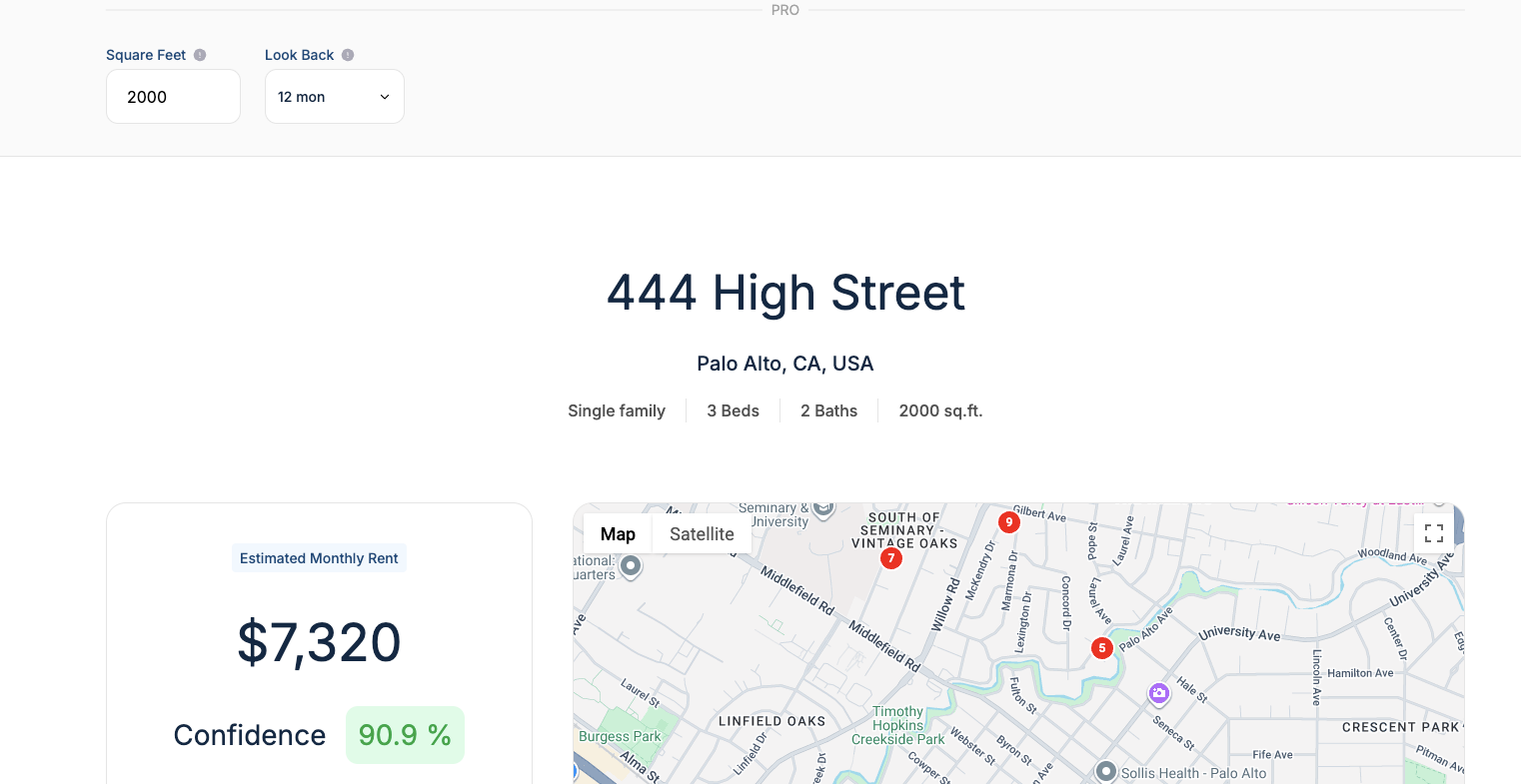
That's the move for BRRRR underwriting: the estimate shifts when you feed it the renovated spec, because you're now pricing the asset that will exist on refinance day, not the one in the listing photos. Match the comps to the finished product and the number stops being a hope.
Underwrite conservatively — the refi depends on it
In BRRRR, an optimistic rent number is more dangerous than in a buy-and-hold, because two things lean on it at once: your monthly cash flow and the appraised value at refinance. If the real rent comes in 8% under your estimate, both crack at the same time.
So price to the lower half of the comp range, not the top. The upside of being conservative is a deal that still works; the downside of being aggressive is a refinance that doesn't return your capital and a cash flow that turns negative.
- Use leased comps, not asking. Advertised rents run high. Underwrite to what units actually rented for.
- Weight recent. Last 60–90 days. A rehab takes months, and you'll lease into a market that may have moved.
- Take the conservative end. If the range is $1,900–$2,150, underwrite at $1,950, not $2,150.
Stress-test the number before you commit
Run the deal at a rent below your best estimate and see if it survives.
- Vacancy. Build in realistic vacancy; a unit doesn't rent the day the rehab ends.
- A soft market. Ask what happens to the refinance and cash flow if rents are flat or down 5% when you lease.
- The downside case. If the deal only works at the top of the rent range, it doesn't really work. A BRRRR should pencil at a conservative rent, with the upside as a bonus.
The takeaway
How do you underwrite rent on a BRRRR deal? Price the finished unit, not the distressed one. Build comps from recently leased renovated rentals that match the post-rehab spec, take the conservative end of the range, and stress-test the deal at a rent below your estimate.
The post-rehab rent carries the entire strategy. Estimate it from the property you'll create, underwrite it cautiously, and the refinance and cash flow have a real foundation instead of a wish.
Estimate post-rehab rent from real comps with RentEst.ai