
Rental Pricing Checklist for Property Managers
Every door you manage needs a rent number, and every one is a small chance to look like a pro or look like you guessed. Do it differently each time and you get inconsistent rents, owners who second-guess you, and pricing that drifts with your mood. The fix is a checklist — the same steps, every unit, every time.
A repeatable process does two things at once. It makes each number defensible, and it makes your whole operation consistent — so the rent on door 40 is set the same disciplined way as the rent on door 4. That consistency is what owners are really paying a manager for.
Here's the per-door checklist, start to finish.
1. Confirm the unit's real specs
Before any number, nail down what you're pricing: bed and bath count, square footage, condition tier, parking, and standout amenities. A pricing process built on a wrong square footage or a missed upgrade is wrong from step one.
2. Pull recent, matching comps
Find recently leased units that match on beds, baths, and rough size within about a mile. Two filters do the heavy lifting:
- Recency — last 60–90 days, so you're pricing the current market.
- Similarity — like-for-like on type and size, not a blended neighborhood average.
3. Run a comp-based estimate and read the range
Anchor to an estimate built from those comps, and note two things: the range the comps form and the confidence behind it. High confidence means price tight; low confidence means the market's thin, so lean conservative and dig into the comps.
4. Adjust for the unit's specifics
Move up or down from the comp range for what makes this unit different — renovation, parking, layout, light, outdoor space. Keep adjustments tied to what comparable units actually got, not to what an upgrade cost the owner.
5. Factor the owner's goal and vacancy cost
Inside the range, where you land depends on the owner's priority. Lease-fast owners price at or below mid-range; max-rent owners price near the top and accept longer days on market. Always weigh the vacancy math: one empty month is roughly 8% of the year's rent, so a premium has to hold a long time to pay for itself.
6. Check the legal limits on a sitting tenant
If there's an in-place tenant, the market number isn't the whole story. Confirm your state and city's rent-increase cap and notice period before you propose a raise. The legal ceiling and the timeline constrain how fast you can move them toward market.
7. Package it as an owner-ready report
The number only lands if the owner trusts it. Deliver it as a clean, branded report — the recommended rent, the range, the comps behind it, and your name on top.
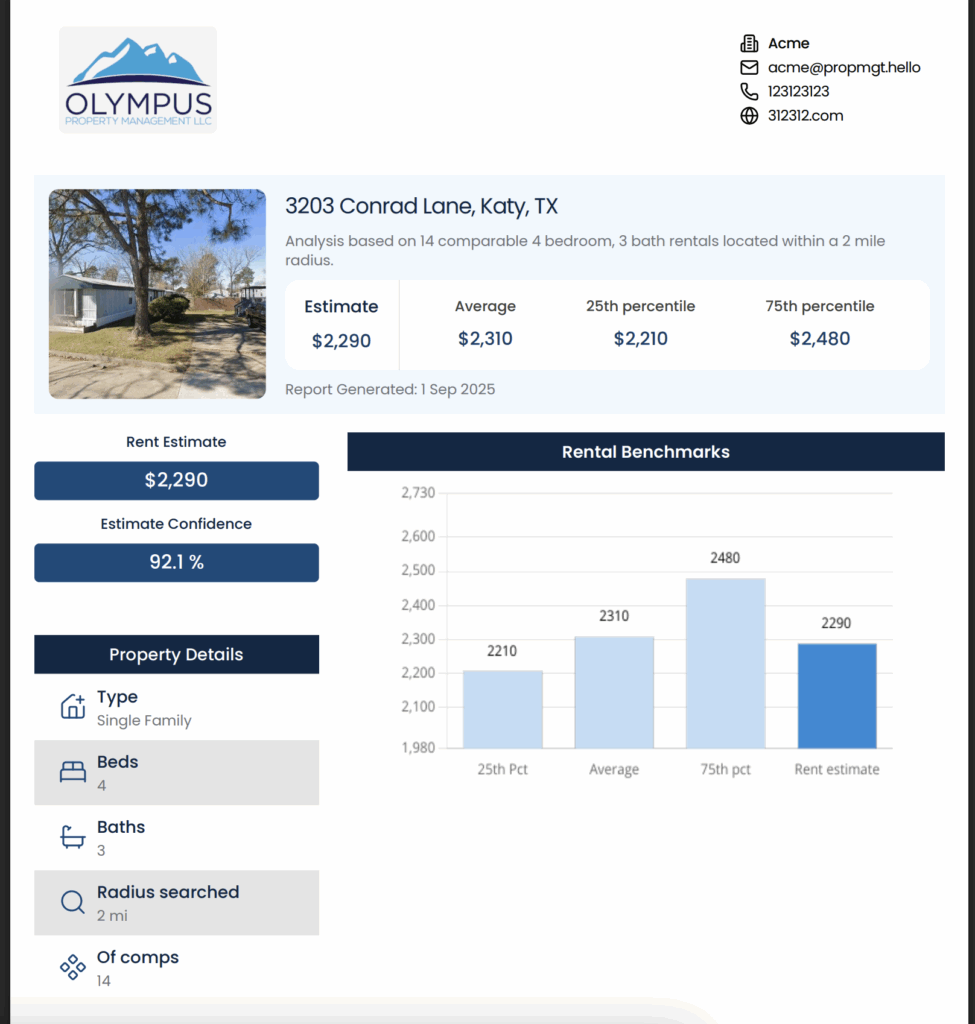
This is the step that separates a manager from a guesser. The owner sees a documented analysis with your brand on it, not a number in an email. It answers the pushback before it starts and reinforces, on every door, that they hired the local expert.
8. Log it and set a re-price reminder
Record the number, the comps, and the date. Then set a reminder to revisit at renewal or in a set window. Pricing isn't one-and-done — the same checklist runs again when the lease comes up, and your log makes the next pass faster.
The takeaway
A rental pricing checklist for property managers turns rent-setting from a judgment call into a process: confirm the specs, pull recent comps, anchor to a range, adjust for the unit, weigh the owner's goal and the law, package it for the owner, and log it.
Run the same steps on every door and two things follow — defensible numbers and a consistent operation. That's what keeps owners trusting you across the whole portfolio, not just on the doors that went well.
Run a consistent pricing process across your doors with RentEst.ai
