
When to Ignore Rent Comps and Trust the Market Instead
Rent comps are the foundation of pricing a rental, but they are not infallible. In some conditions, leaning too hard on comps leads to underpricing, longer vacancies, or missed upside.
Comps assume one thing: that yesterday's leases reflect today's demand. When that assumption breaks, the comps start to mislead — and a confident-looking number can be wrong.
This post covers the scenarios where comps lose accuracy, what "the market" actually means in practice, and how to price when the data feels contradictory.
Why rent comps usually work
Comps work best in stable, liquid markets. When enough similar units lease regularly, recent comps are a reliable snapshot of what tenants pay.
A rent estimate by address aggregates that data into averages, medians, and ranges, making comps fast and actionable. The trouble starts when the underlying leases no longer represent current demand.
1. Rapidly rising or falling markets
In fast-moving markets, comps lag reality. A lease signed 60–90 days ago may already be obsolete.
- Rising markets often carry comps that are too low.
- Softening markets show inflated historical rents.
If listings lease quickly above comp averages — or sit far longer than expected — that gap is the market telling you the comps are stale.
2. Limited or low-quality comps
In small towns, unusual neighborhoods, or single-family markets, comp volume is thin. When your analysis rests on only a handful of properties, mismatched layouts, or poorly maintained units, the math can be technically correct but practically wrong.
This is exactly what a low-confidence estimate looks like.
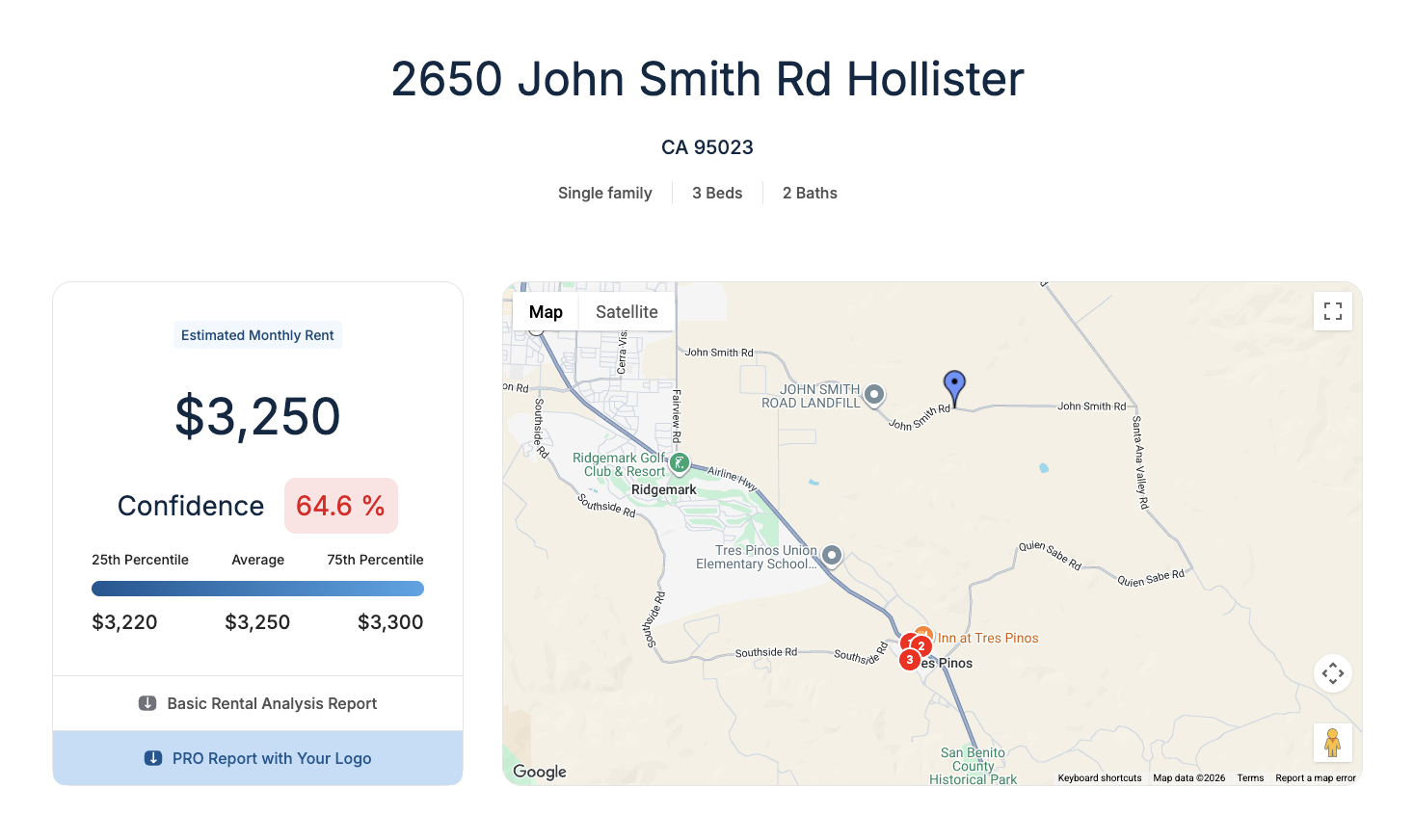
At 64.6% confidence with three far-flung comps, this is a number you anchor to lightly and then validate against live listings — not a verdict. A ZIP-level rent estimate can set a directional baseline when comps are this thin.
3. Newly renovated or repositioned units
If your unit is meaningfully better than nearby inventory — new flooring, modern kitchen, upgraded HVAC — historic comps undervalue it.
Tenants do not pay off a spreadsheet. They pay for perceived quality relative to what is actually available right now.
4. Seasonal demand shifts
Comps rarely adjust for seasonality. Leasing in peak months versus the off-season can swing achievable rent by hundreds of dollars. When you price during a summer leasing spike, a university inflow, or a post-shortage stretch, live demand often matters more than trailing comps.
What "trusting the market" actually means
Trusting the market is not guessing. It is watching live signals that reflect tenant behavior right now:
- Days on market — fast showings and applications signal underpricing.
- Inquiry volume — multiple leads in the first 48 hours means strong demand.
- Application quality — well-qualified tenants applying quickly.
- Competing listings — what is actively available, not what leased months ago.
These indicators routinely outperform comps in volatile conditions.
A practical pricing framework
| Market condition | Primary input | Secondary check |
|---|---|---|
| Stable market | Rent comps | Active listings |
| Rapidly rising | Live demand signals | Comps from last 30 days |
| Thin data | Active listings | ZIP-level averages |
| Repositioned unit | Competitive listings | Upper-quartile comps |
How to price when comps feel wrong
- Run a standard estimate to anchor expectations.
- Review active listings within a tight radius.
- List slightly above comp median if demand is strong.
- Track inquiries for 7–10 days.
- Adjust quickly — markets punish slow reactions.
Fast iteration with address-level estimates and CSV exports makes this far less risky than holding a stale price.
Common mistakes to avoid
- Over-filtering comps until only a few remain.
- Ignoring active listings entirely.
- Waiting too long to adjust.
- Anchoring emotionally to one comp.
The takeaway
Rent comps are a starting point, not a verdict. In fast-moving or thin markets, the best decisions combine comps with live demand signals — and the confidence score tells you when to lean on the market instead of the spreadsheet.
Anchor with a real estimate, then validate against live demand at rentest.ai/rent-estimate-by-address.
Should I ever completely ignore rent comps? No, but discount them heavily when they are outdated, sparse, or mismatched to your unit.
How long do rent comps stay relevant? In stable markets, 60–90 days. In volatile ones, relevance can fade in weeks.
Are active listings more important than leased comps? During a pricing decision, yes — active listings reflect current competition.
What if my unit is better than all nearby comps? Price toward the top of the range and let demand validate the number.