
How Far Is Too Far? Choosing the Right Radius for Rent Comparables
The radius you pick for rent comparables quietly decides how good your rent estimate is. Set it too tight and you may have only two or three comps to work with. Push it too wide and you start pulling in properties that lease in a different market entirely.
A rural property with comps a few miles out is not the same problem as an urban unit with fifty comps inside a half mile. The right radius depends on where you are.
This post lays out how to choose a rent comparable radius by market type, when to widen it, and how to spot the moment your radius has gone too far.
Why radius drives accuracy
Rental markets are hyper-local. A property a mile away can rent for hundreds less if it crosses into a different school district, building type, or neighborhood.
The radius you choose directly affects three things:
- Comp count — too few comps and the average swings on a single listing.
- Estimate accuracy — the wrong comps drag the number toward the wrong market.
- Defensibility — comps you would not show an owner with a straight face undermine the price.
You can see this play out in the confidence score. A thin, far-flung comp set is exactly what a low-confidence estimate looks like.
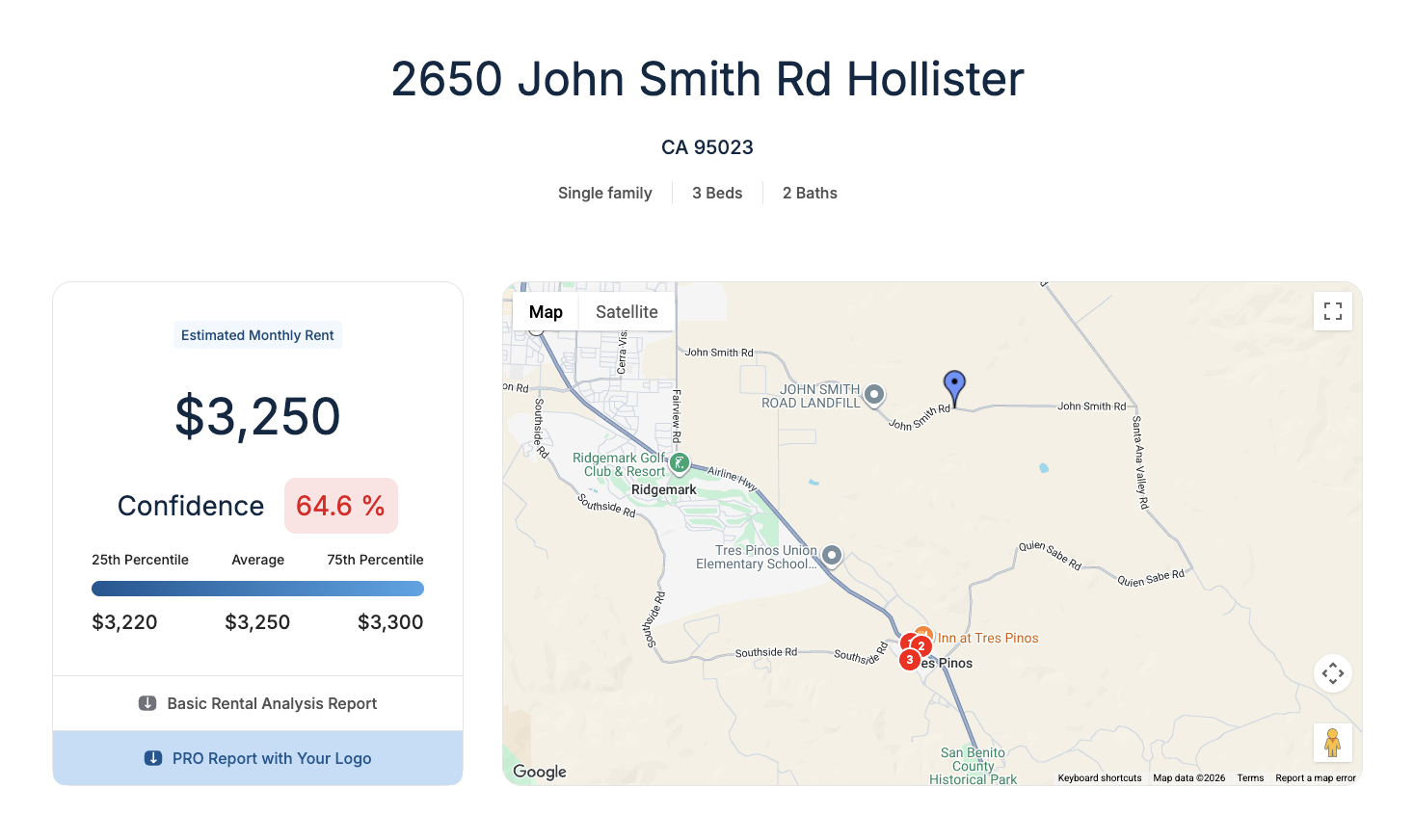
The 64.6% confidence here is a direct signal: the comps are too few and too far to trust the number as-is.
Recommended radius by property type
Density should set your starting radius. Dense markets price block by block; thin markets force you outward.
| Property type | Starting radius | Why |
|---|---|---|
| Urban apartments | 0.25–0.5 mi | Dense supply, block-level pricing differences |
| Suburban single-family | 0.5–1 mi | Neighborhood lines matter more than raw distance |
| Small / rural markets | 1–3 mi | Limited inventory forces a wider net |
When widening the radius makes sense
Expanding outward is not a mistake on its own. It is often the only way to get a usable comp set. Widen when:
- You have fewer than 5–7 valid comps at the starting radius.
- The property is unusual — odd size, age, or layout with no close match nearby.
- Turnover is low and few units have leased recently.
When you do widen, tighten other filters in exchange — beds, baths, and building type — so distance is the only thing you are loosening.
Red flags that your radius is too wide
Watch the comp table for these tells. When they show up, the radius is doing more harm than good.
- A wide rent range — comps spanning $1,200 to $2,400 are not one market.
- Mixed property types — apartments sitting next to single-family houses.
- Comps crossing school zones or city lines.
- A number you cannot justify to a tenant or owner with a straight face.
The comp table is where you check all of this at once — distance, beds, baths, sqft, and last-seen date on every comp.
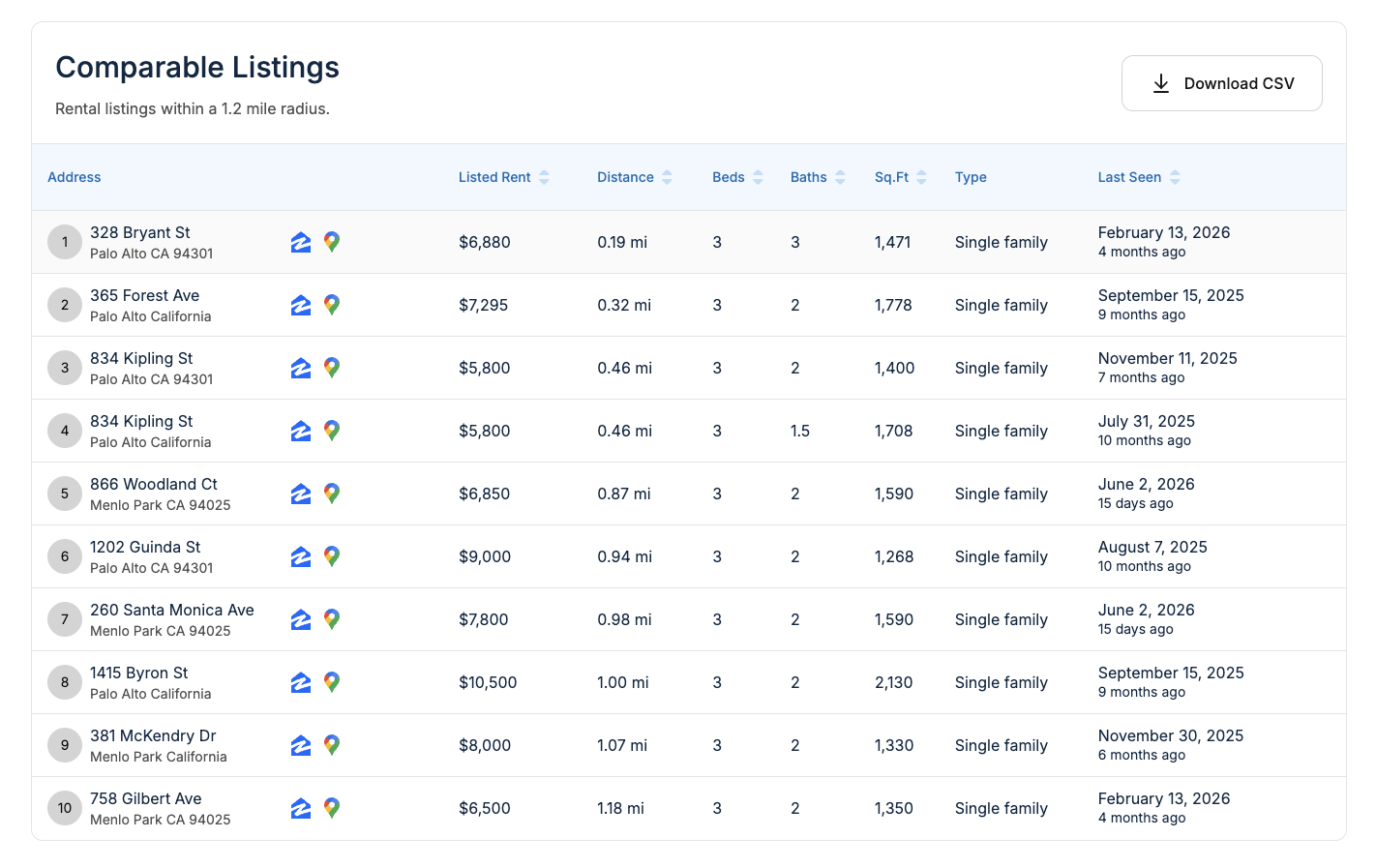
Sorting by distance shows you exactly where the far comps sit and whether dropping them tightens the range.
A framework to set the right radius
- Start small — 0.25–0.5 miles in dense areas.
- Check comp count — aim for 7–15 well-matched comps.
- Expand in 0.25–0.5 mile steps only if you fall short.
- Filter by building type and bed/bath as you go wider.
- Stop when extra comps stop tightening the range — more data past that point is just noise.
Why radius beats neighborhood averages
Neighborhood and ZIP-level averages hide variation. Two streets in the same ZIP can behave like different markets.
That is why a rent estimate by ZIP code is best for directional context, not final pricing. A tight, distance-filtered comp set gets you to a number you can defend.
The takeaway
The goal is not more data — it is better data. Start tight, widen only when the comp count forces you to, and stop the moment extra comps stop sharpening the range. Urban markets rarely need more than 0.5 miles; suburban homes rarely more than a mile; small markets need a wider net and aggressive filtering.
Run a live estimate and watch the comps and confidence move as you adjust at rentest.ai/rent-estimate-by-address.
What is the best radius for rent comps? It depends on density. Most accurate analyses start within 0.5 miles and expand only when comps run short.
Is a larger radius more accurate? No. Larger radii add noise unless paired with strict beds, baths, and type filters.
How many rent comps do I need? Typically 7–15 well-matched comps produce a stable signal.
Should I use ZIP-code rent estimates? They are useful for market context, not precise pricing.