
Apartment vs Single-Family Rent Pricing: Why the Math Is Different
Price a single-family home with apartment-style logic and you can be off by hundreds of dollars a month. Apartments cluster, so they price off the market average. Houses are one-off assets, so they price off scarcity and features.
The same comp set that nails an apartment will mislead you on a house, and the reverse is just as costly. This post shows why the two follow different rules, and how to price each one correctly.
Why the two diverge
The split comes down to scale, substitution, and tenant behavior.
Apartments exist in clusters. A 200-unit building has dozens of near-identical units, and a tenant can pick from several buildings within a few blocks. Small price gaps push demand elsewhere fast.
Single-family homes exist one at a time. A 4-bedroom house with a yard in a specific school zone may have two or three real substitutes in the whole neighborhood. Fewer options means less price sensitivity.
That structural difference is what changes how comps work and how much pricing power you actually have.
Apartments: market-driven and statistical
Apartment pricing behaves like a classic market average. Tenants compare many similar units at once, so the median rent of nearby comps is usually your answer.
- Large supply of near-identical units in a tight radius
- High sensitivity to small price changes
- Pricing anchored to neighborhood medians, not top-end listings
- Frequent adjustments as vacancy moves
For apartments, tight-radius comps and the median do most of the work. The top of the range is noise.
Single-family homes: scarcity and willingness to pay
Single-family rentals are not commodities. Each home is unique, and tenants have fewer substitutes, so the math leans on features instead of averages.
- Lower inventory in most neighborhoods
- Premiums for yards, garages, parking, and privacy
- Less price sensitivity once the home meets a family's criteria
- Square footage and lot size matter more than they do for apartments
A 3-to-4-bedroom house in a family area often prices above the neighborhood average. Address-level comps beat broad zip medians here.
See the comps behind the number
Whichever type you price, the fix is the same: look at the actual comps, not just a single figure. RentEstimate shows every comparable listing it used — address, listed rent, distance, beds and baths, square footage, type, and last-seen date.
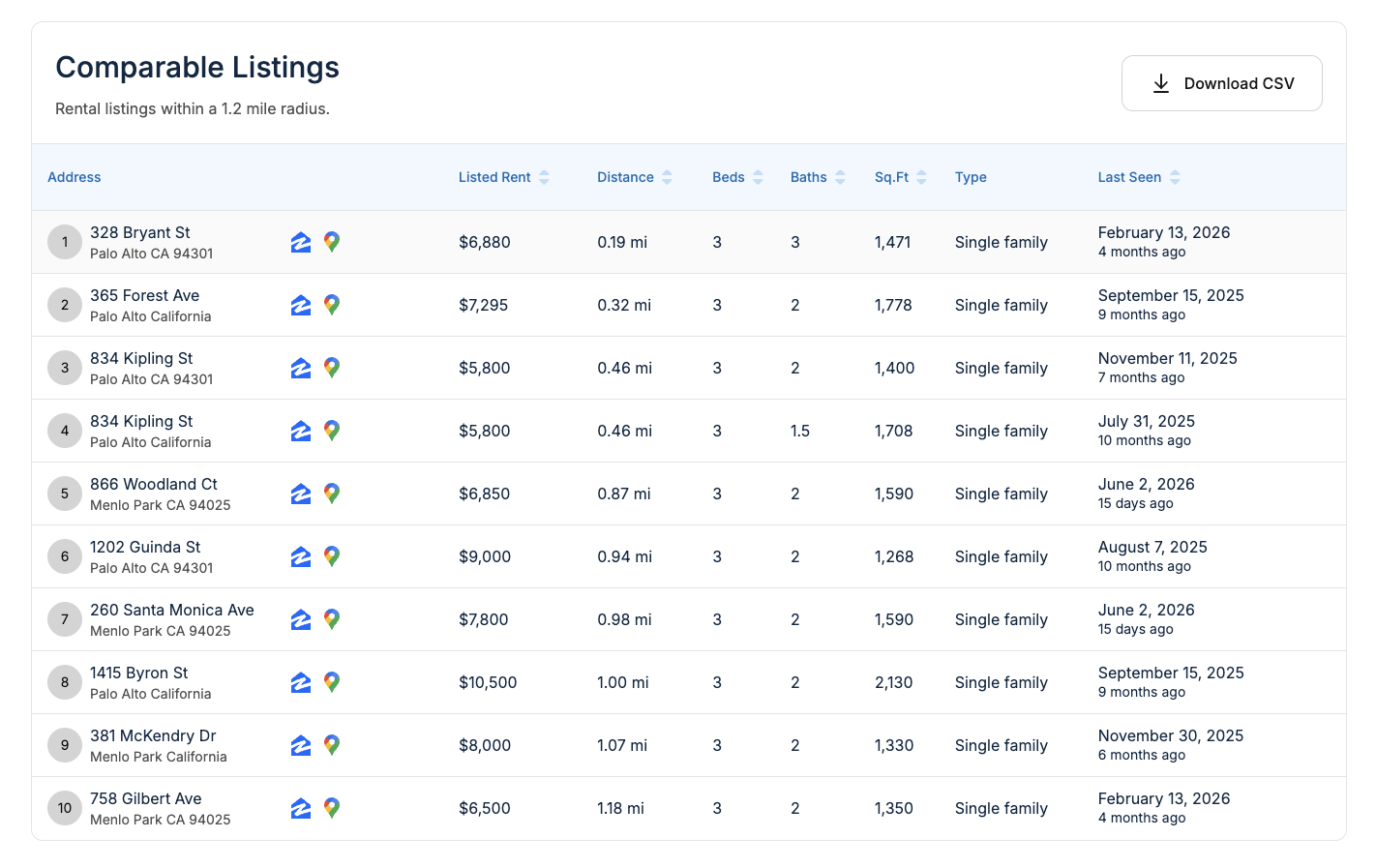
For an apartment, you confirm the comps are the same unit type and lean on the median. For a house, you filter to similar beds, baths, and square footage, and adjust for features the table can't show.
How comps work differently
| Factor | Apartments | Single-family homes |
|---|---|---|
| Comparable pool | Large, homogeneous | Small, highly variable |
| Pricing method | Median driven | Feature-adjusted |
| Outliers | Ignore them | Often relevant |
| Vacancy sensitivity | High | Lower |
| What matters most | Median of close comps | Beds, baths, sq ft, lot, condition |
1. Price an apartment
- Start with the median rent of close comps, not the average
- Apply modest premiums for in-unit upgrades
- Stay within a tight comp radius of similar buildings
- Re-check and adjust as vacancy moves
2. Price a single-family home
- Anchor to comps with the same bedroom count and similar square footage
- Adjust up for yard, garage, and privacy
- Ignore low-end apartment comps entirely
- Validate against recently leased houses, not just active listings
Common mistakes to avoid
- Using apartment comps to price a house (or the reverse)
- Overweighting square footage alone for an apartment
- Pricing off the average when the median is more honest
- Relying on stale listing prices instead of recent leases
The takeaway
Apartments behave like statistical averages. Single-family homes behave like scarce assets. Picking the right framework matters far more than fine-tuning the last $25.
If you price both, run each on its own terms and look at the comp set before you commit to a number.
Run a free rent estimate by address and see the comps behind the number.
Related articles
- What Makes a Good Rent Comparable: Distance, Age, and Unit Type Explained
- Why Median Rent Beats Average Rent for Smarter Pricing Decisions
- How Rent Sensitivity Changes by Market Size: Urban vs Suburban vs Rural
Frequently asked questions
Do single-family homes usually rent for more than apartments? On a per-unit basis, yes, especially for 3-plus bedroom homes. Per square foot apartments can look higher, but total rent often favors houses.
Should I use the same comps for apartments and houses? No. Mixing property types distorts the average and gives you an inaccurate number.
Are apartment rents more volatile? Yes. Apartments respond faster to supply changes and vacancy pressure.
What's the best way to price a single-family rental? Use address-level comps, recently leased listings, and feature-based adjustments rather than broad neighborhood averages.